Take Me Back to Japan!
Happy first day of October! Well, it was the first day of October when I started writing this very long post! The year has flown by, and I never got a chance to recap my birthday trip to Japan last year. And now my next birthday is already coming up VERY soon. Even though it has been almost a year, I’m documenting everything now for future travel tips, but also because last year’s birthday trip was such a special experience and I want to remember it. I booked my flights just two weeks before leaving, and it was still such a good deal. I had been to Japan once fourteen years ago, but this trip was an entirely different experience.
Happy first day of October! Well, it was the first day of October when I started writing this very long post! The year has flown by, and I never got a chance to recap my birthday trip to Japan last year. And now my next birthday is already coming up VERY soon. Even though it has been almost a year, I’m documenting everything now for future travel tips, but also because last year’s birthday trip was such a special experience and I want to remember it. I booked my flights just two weeks before leaving, and it was still such a good deal. I had been to Japan once fourteen years ago, but this trip was an entirely different experience.
One major difference between last year’s trip and the one fourteen years ago was the much more favorable exchange rate. It was almost 155 yen to 1 USD, whereas fourteen years ago, it was about 77 yen to 1 USD. What a huge difference that makes in affordability and the overall travel experience! Also, I’m a much better traveler now. Back then, I visited with two girlfriends, used an actual physical Lonely Planet book to research the trip, and went in February when it was TOO cold! Last year, I visited solo, last minute, in November. I had run out of my usual matcha, and it was sold out for a few months at the company that I usually buy from, so I thought, maybe I can just hop over to Japan to pick some up. Two weeks before my birthday, direct flights to Tokyo were less than $800 from Los Angeles. I didn’t get a chance to make many restaurant reservations at my first-choice spots, but I did make one for my birthday in Kyoto. I figured I’d just wing the rest, which is very unlike me. This is going to be a long post, so if you just want quick tips, scroll to the end for a recap.
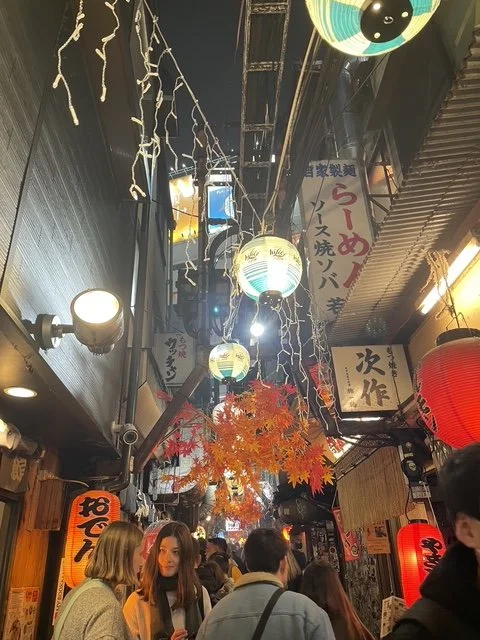
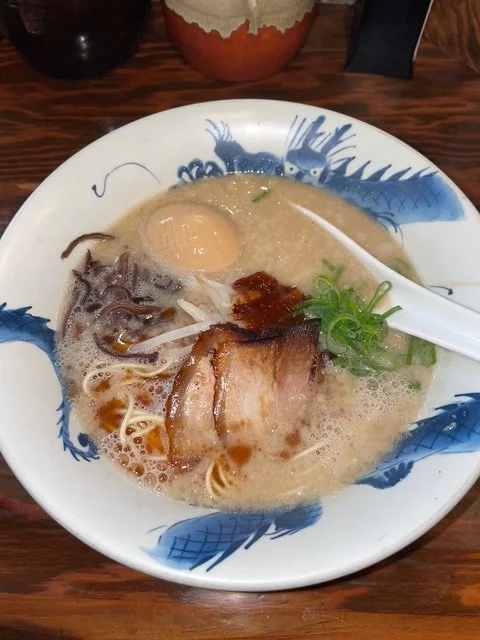
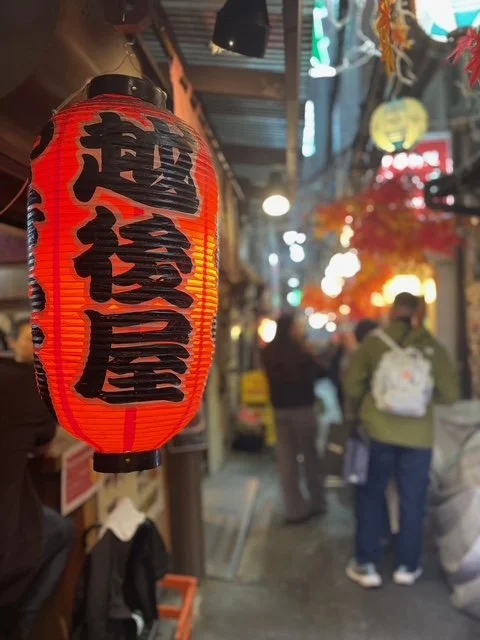
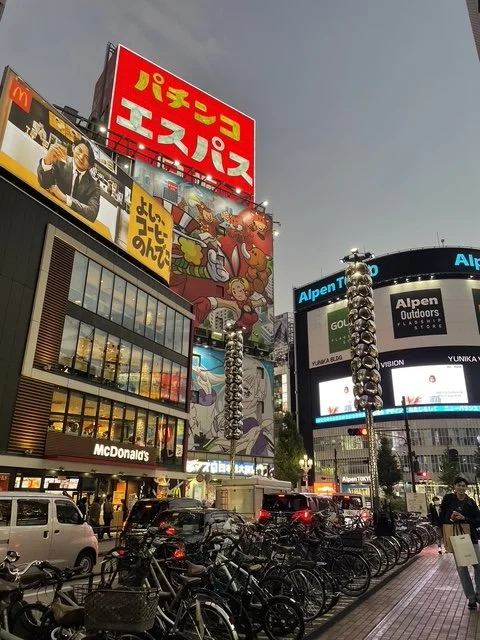
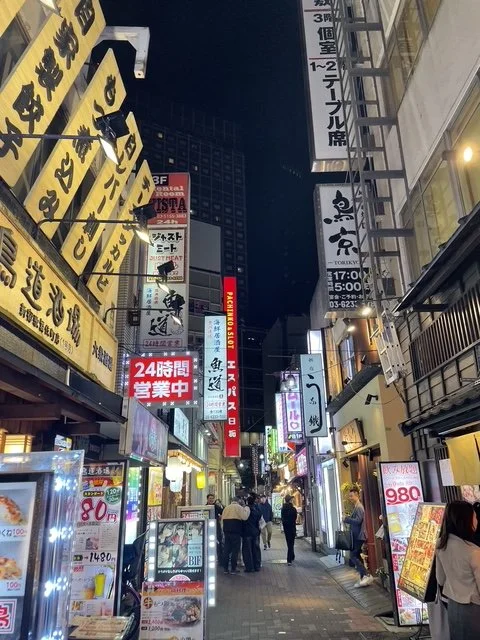
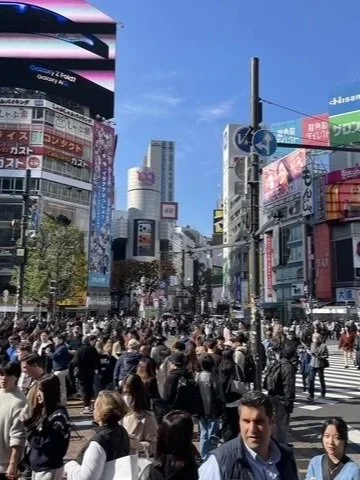
I broke my trip up into three legs: 3 nights in Tokyo in the Shinjuku area (lively, crowded), 3 nights in Kyoto in the Karasuma area (downtown), and 1 night in Tokyo in Ginza (upscale). After arriving in Tokyo, I booked a bus for $9 into the city from a booth near the airport exit. The bus was simpler than lugging my suitcase to a train station and switching trains, and it took me directly to my hotel neighborhood. I was able to walk from the drop-off point to The Prince Hotel. THE PRINCE HOTEL is a decent, affordable mid-range hotel in the busiest part of Shinjuku with small basic rooms. It was a good location to really experience Tokyo with its chaotic, lively, and loud atmosphere. It was near a lot of shopping as well as the famous touristy OMOIDE YOKOCHO (MEMORY LANE ALLEY). Memory Lane is a quaint and romantic alley with lanterns, small pubs, and little izakaya restaurants. Even though it looked and smelled good, I heard it was touristy to eat there. I wandered over to TATSUNOYA, which was my favorite ramen spot of the entire trip. I had to wait in line to get in, but fortunately not too long as I got there right at opening. You choose your ramen and pay at a machine before being seated. My ramen was $8 and it came with extra pickled mung bean sprouts for me to add to my bowl, which I loved.
While I am glad I got to experience Shinjuku, I probably wouldn’t stay here again. A bit too chaotic for me. There were so many food options that it was overwhelming. I often found myself paralyzed with choices, not knowing which places were good or which places were tourist traps. Fortunately, they have really nice food halls at the basement level of department stores as well as in the major train stations. Many popular restaurants that I popped into were fully booked and you couldn’t get a seat without a reservation. Definitely book in advance if you can! I also tried the famous ramen chain that you always see on TikTok with the solo booths called ICHIRAN. It was an hour-long wait, and I thought it was overrated. It was not worth the wait at all, but I think it’s open late at night or maybe even 24 hours for those who need a late night snack. I found another ramen chain I liked better called IPPUDO, and it has locations all throughout the city.

Shinjuku station is insane. It’s a maze to get around and out of. I got lost because I couldn’t find the right exit. Somehow I ended up at a food hall in the bottom of a popular department store because everything is connected. I liked that about Tokyo, being able to get lost. When do we get lost anymore? It was an adventure and it was fun because Tokyo felt so safe. To be somewhere traveling solo without the weight of crime, danger, and female-targeted violence was so liberating. I didn’t have to worry about how I held my purse, what I wore, getting mugged, being attacked, or walking around solo at night. The freedom definitely made it easier for me to enjoy myself.
I also chose not to purchase data on my phone through AT&T during this trip. This was before I learned about purchasing eSims (Airalo), a cheaper alternative to AT&T, which charges $12 a day internationally with a maximum charge of $120 per cycle. I wanted to challenge myself, be present, and not be on my phone unless I needed to be. Usually by the time I got back to the hotel and had WIFI, I was too exhausted to doom scroll on social media. I had to plan my routes in advance, take screenshots, and if I was truly lost, I’d stand outside of a cafe and hop onto their free Wi-Fi. I was only going to test this for a day or two but ended up going data free the entire week.
While staying in Shinjuku, I shopped at Uniqlo (so much cheaper than the USA and sizing is different) and Onitsuka Tiger (got my first pair of sneakers for about $120 vs $286 in the USA with tax). The great thing about shopping in Japan is that you can purchase items vat-free without having to fill out a form and submit it at the airport. You just have to present your passport at checkout and they won’t charge you tax. However, the laws for duty-free shopping are due to change next month in Japan. I stopped by beauty stores and pharmacies to stock up on beauty products and to get trinkets and candy for my niece and nephews.
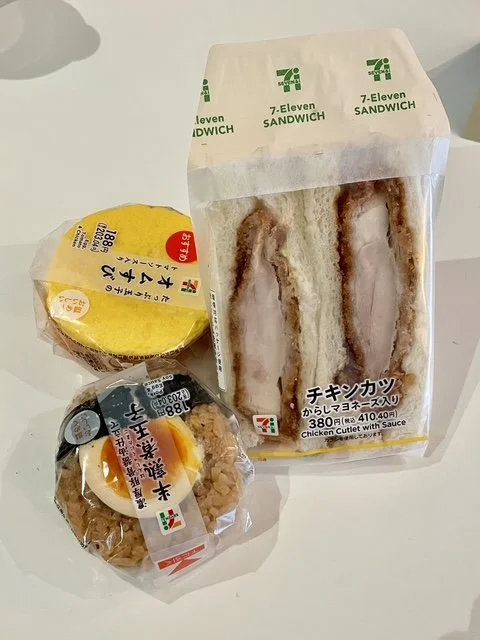
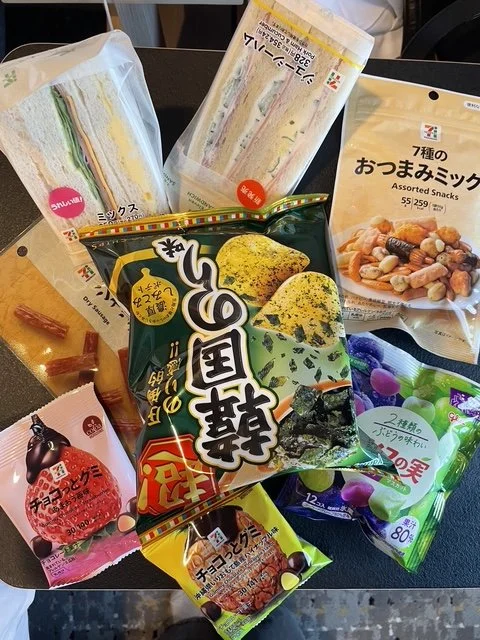
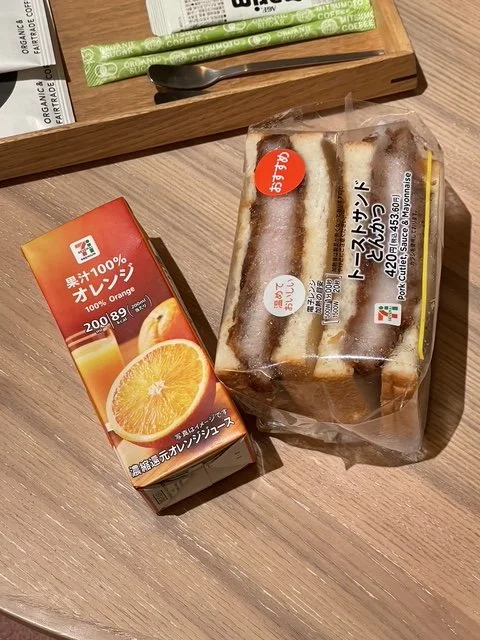
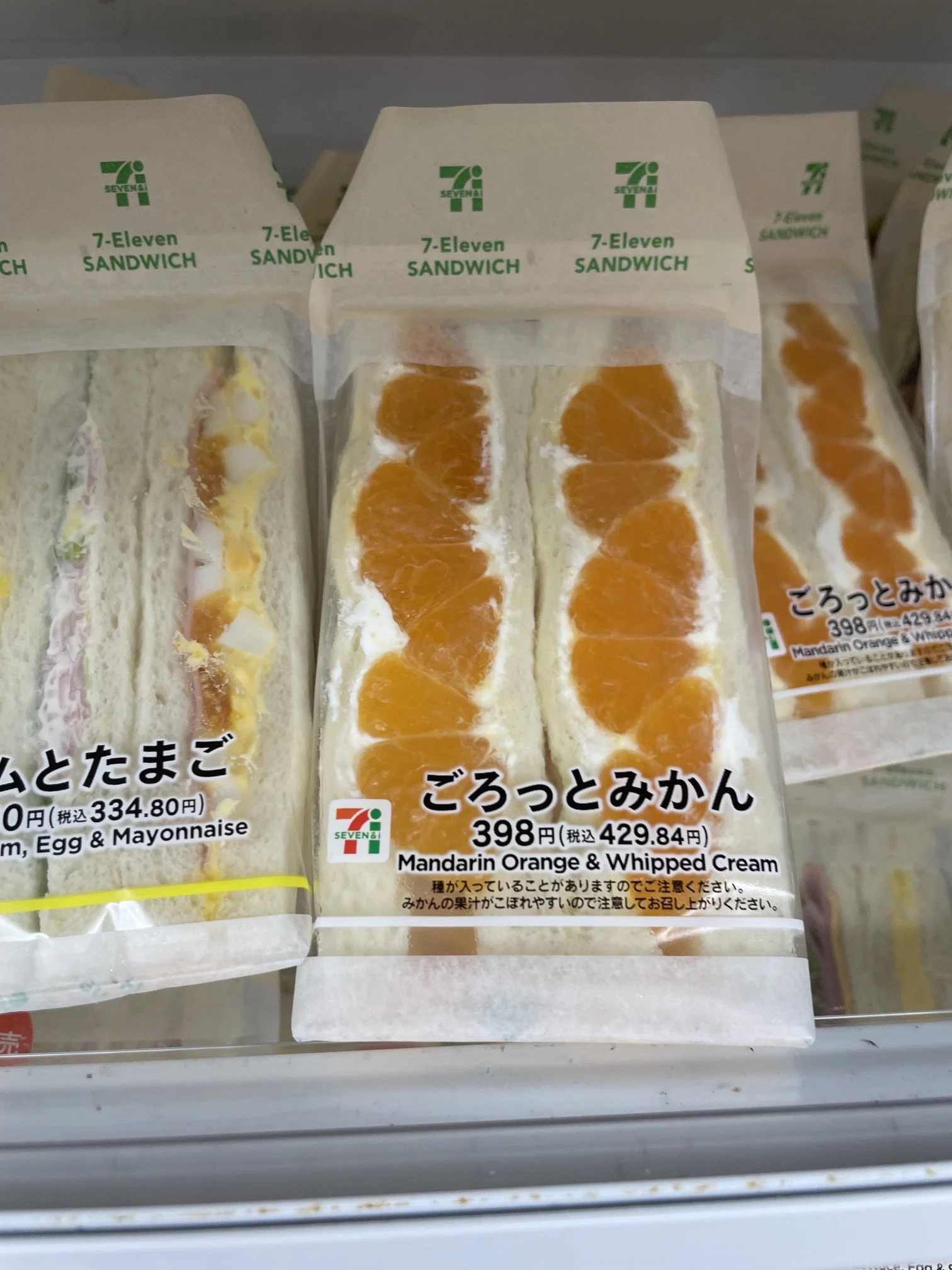
I must mention that cafes in Tokyo don’t open early at all. A lot of places don’t even open till 11am. But I did find that THE MATCHA TOKYO NEWOMAN opened at 8am. So if you’re hungry early, go to 7-Eleven and try everything. I found myself going there a lot because I was too overwhelmed and tired to make a decision. I personally enjoyed the pork cutlet, ham cucumber mayo, and teriyaki chicken sandwiches. They will warm it up for you at the register, if you need to. I wanted to check out a pizza spot called PIZZERIA MARUMO, but I couldn’t get a reservation and no one responded to me when I DM-ed them about solo walk-ins. I’m sure I probably could have done it, but I didn’t feel like trekking over there if it wasn’t guaranteed. There were some sushi and izakaya spots I wanted to check out, but again, I didn’t have a reservation and was turned away often.
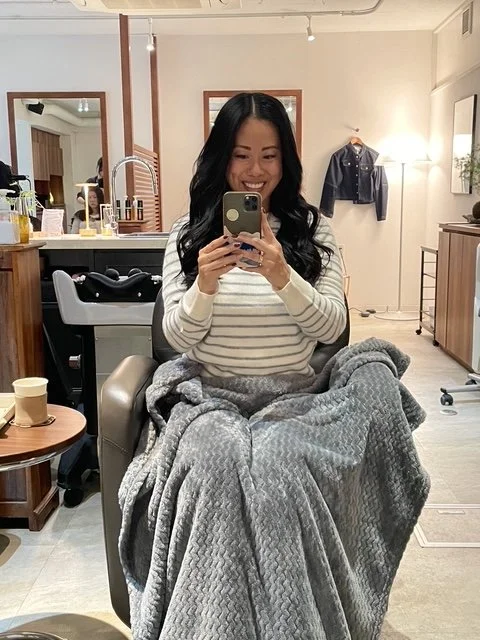
While staying in Shinjuku, I took advantage of getting a facial (at KOZY) and going to a hair spa (at THE HEAD SPA). I had seen the hair spa experience on social media, so I was curious. I had to make these beauty appointments in advance. The facial was fine and more affordable than in LA. The head spa and head bath were a special experience though! So serene, like the feeling you would have at a day spa. Ambient music, dim lights, hot tea, soft blanket, and scalp massage. I would recommend this for sure. It’s about $100 though. However, when they style your hair, they tend to blow dry it flat vs voluminous like they would in the USA. The head spa left me feeling very relaxed afterwards. There are several locations and they book up quickly, so make a reservation early.
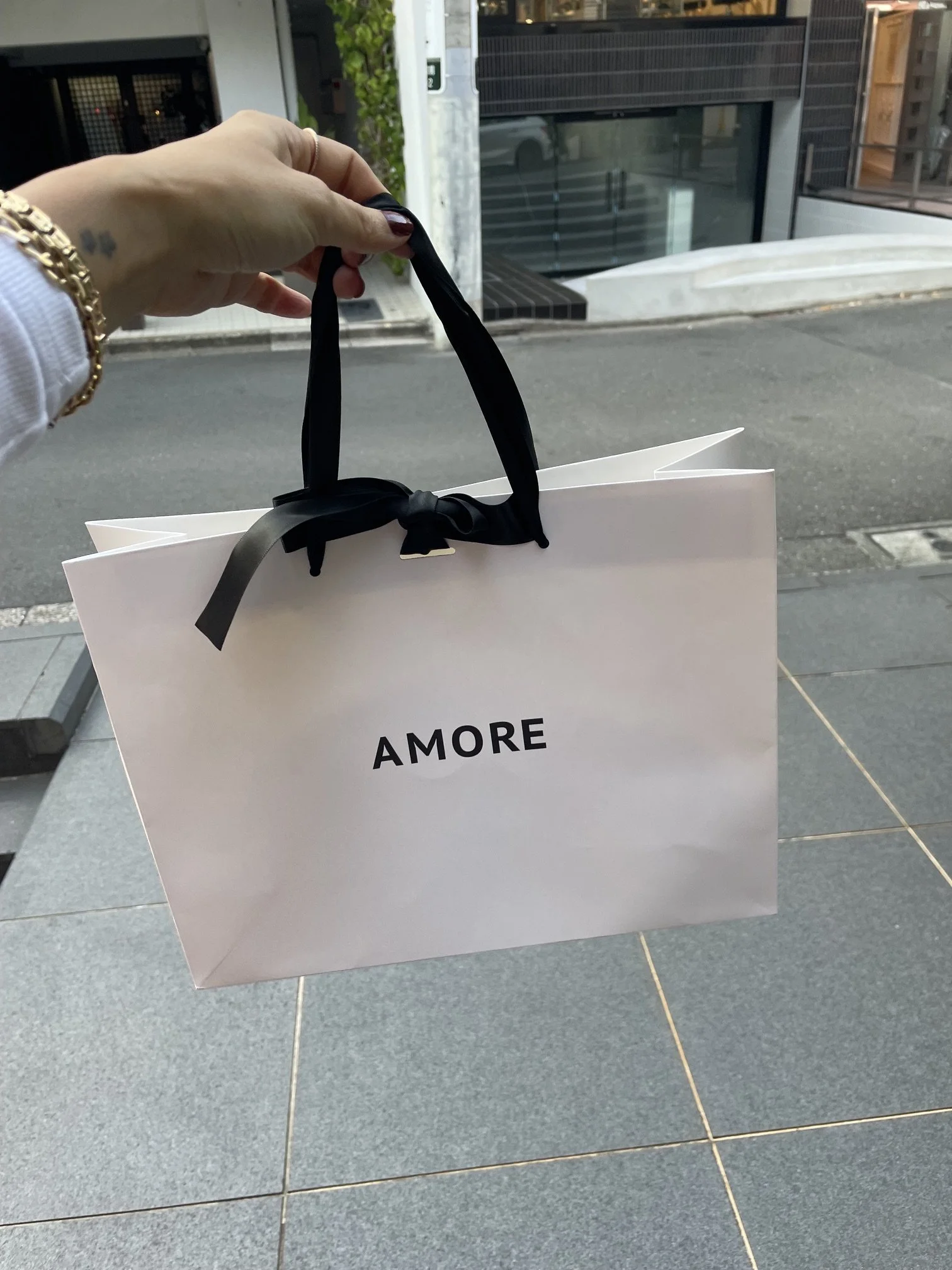
I ventured into some ritzy areas for some designer vintage shopping in Omotesando, near Harajuku. I went to AMORE VINTAGE, PARADISE VINTAGE, and VINTAGE QOO. They are all pretty close to each other, with some on the same streets. I ended up buying a little birthday handbag at Amore Vintage. Japan is the best place for vintage shopping because they have very strict laws about selling fakes and this gave me peace of mind while shopping. Though I did learn about someone on TikTok who later discovered that her authentic Hermes Birkin she got from Japan was painted and touched up, so it affected the value of her bag. It really only makes a difference for resale. I didn’t know this, but it’s good info to keep in mind while shopping.
Japan is still a good place to get vintage because you don’t have to pay VAT, authenticity is pretty much guaranteed, and inventory is usually in impeccable condition. Many vintage Chanel bags have hardware plated with real gold. They don’t make them that way anymore. Preloved newer styles (that aren’t vintage) are drastically cheaper than in the USA (since they aren’t as rare), and only cost a little more than the vintage pieces, so I think that’s where you can experience the most savings. Vintage pieces are generally a lot less expensive in Japan especially with tax savings, but I wouldn’t say it’s cheap. For some brands, it’s still expensive, but you have a huge selection to choose from in close proximity, including a lot of rare pieces, and can inspect it in person. The same selection does not exist in the USA, especially in the same condition for a comparable price. So I do not regret my purchase at all. I really do give myself the best presents! 😊
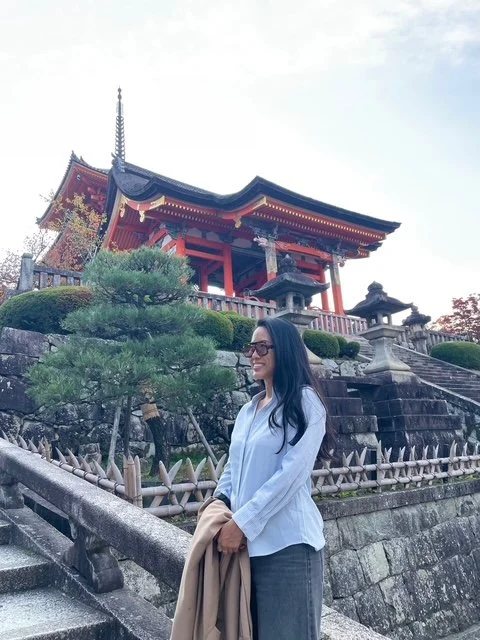
After three nights in Shinjuku, I took the Shinkansen train (the fast train) to Kyoto. I purchased my train tickets the night before at the Shinjuku train station, where there’s a customer service desk. You can use a machine to purchase tickets, but I preferred a human. The ticket to Kyoto was almost $100 one way for the fast bullet train, which takes about 2 hours and 15 minutes. Because I had a large suitcase, the agent recommended I get the last seat in the train car with personal luggage space behind the seat. Later, I learned that it’s not required to reserve those specific seats to travel with a large suitcase, though it is convenient. These seats are mainly for travelers with truly oversized luggage. Most regular checked suitcases fall under their 160 cm threshold. There aren’t as many of these seats available on each train, either.
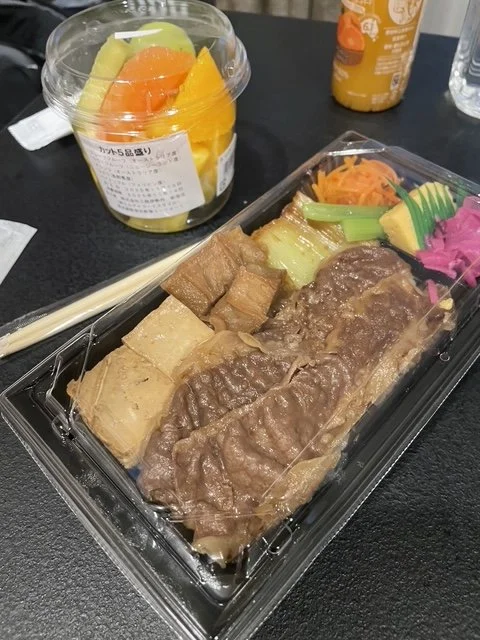
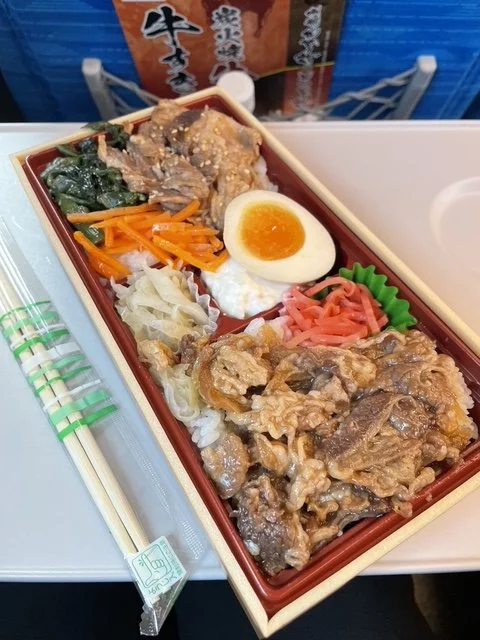
Alternatively, you can store your luggage on the overhead shelf above your seat or in the communal luggage area at the entrance of the train car. The only issue is having the strength to lift your suitcase over your head. When the communal luggage area filled up, I saw people laying their luggage flat in the entryway space so that it wouldn’t roll. Going to Kyoto, I specifically chose a time slot that had a back seat available with dedicated large luggage space behind me. For my return to Tokyo, I paid to choose my seat, but there weren’t any back seats available for my train times, and the entryway luggage cubbies were completely full. I didn’t think to lay my suitcase down flat in the entryway until I saw others do it. Fortunately, the guy I sat next to was a big American dude who was 6’7” and was able to lift my suitcase onto the shelf above our seats with no problem. Because I didn’t have data, I chatted with the stranger for the entire 2 hours and it was nice. He booked the trip last minute as well because he was starting a new job in NYC. If you’re traveling with a small suitcase, you probably don’t need to pay extra to choose a seat. You could just show up early to grab a seat in the non-reserved train cars, but the price difference may be minimal. Make sure you purchase a snack for the train ride. They have convenience stores in the train station as well as bento box food stalls.
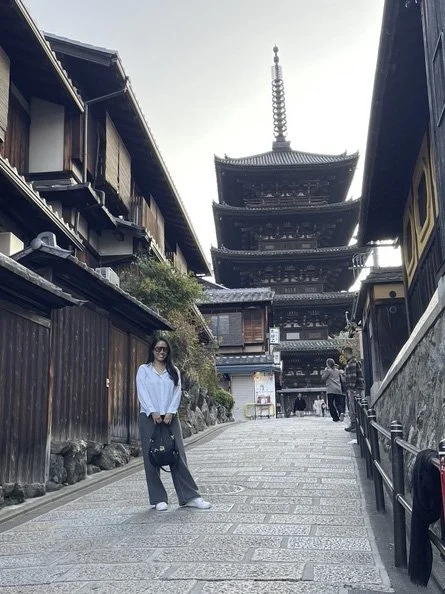
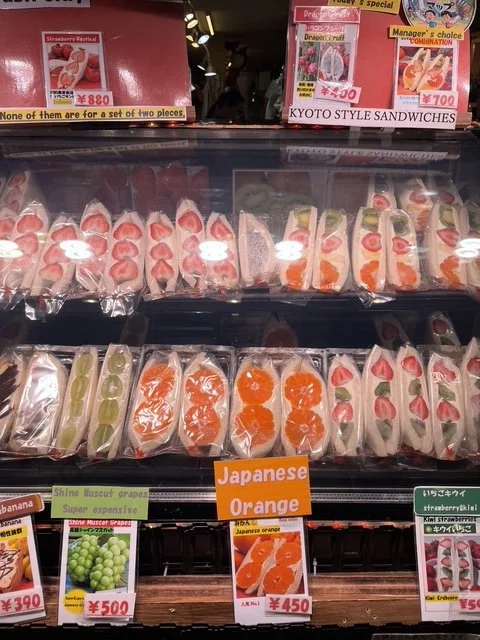
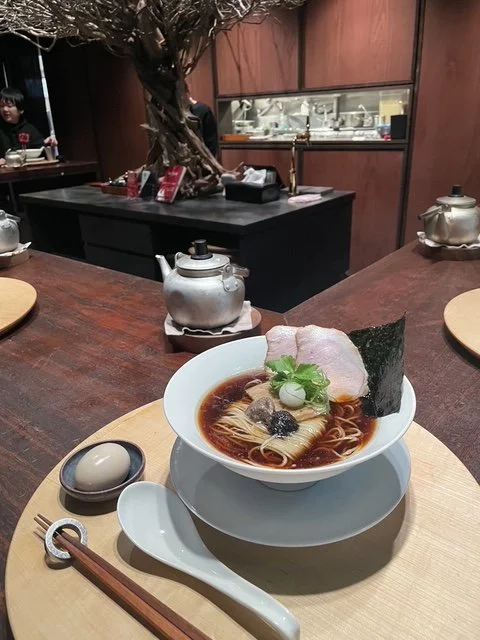
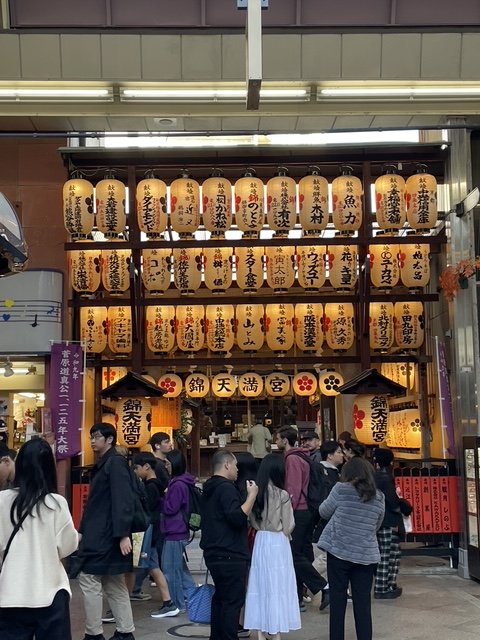
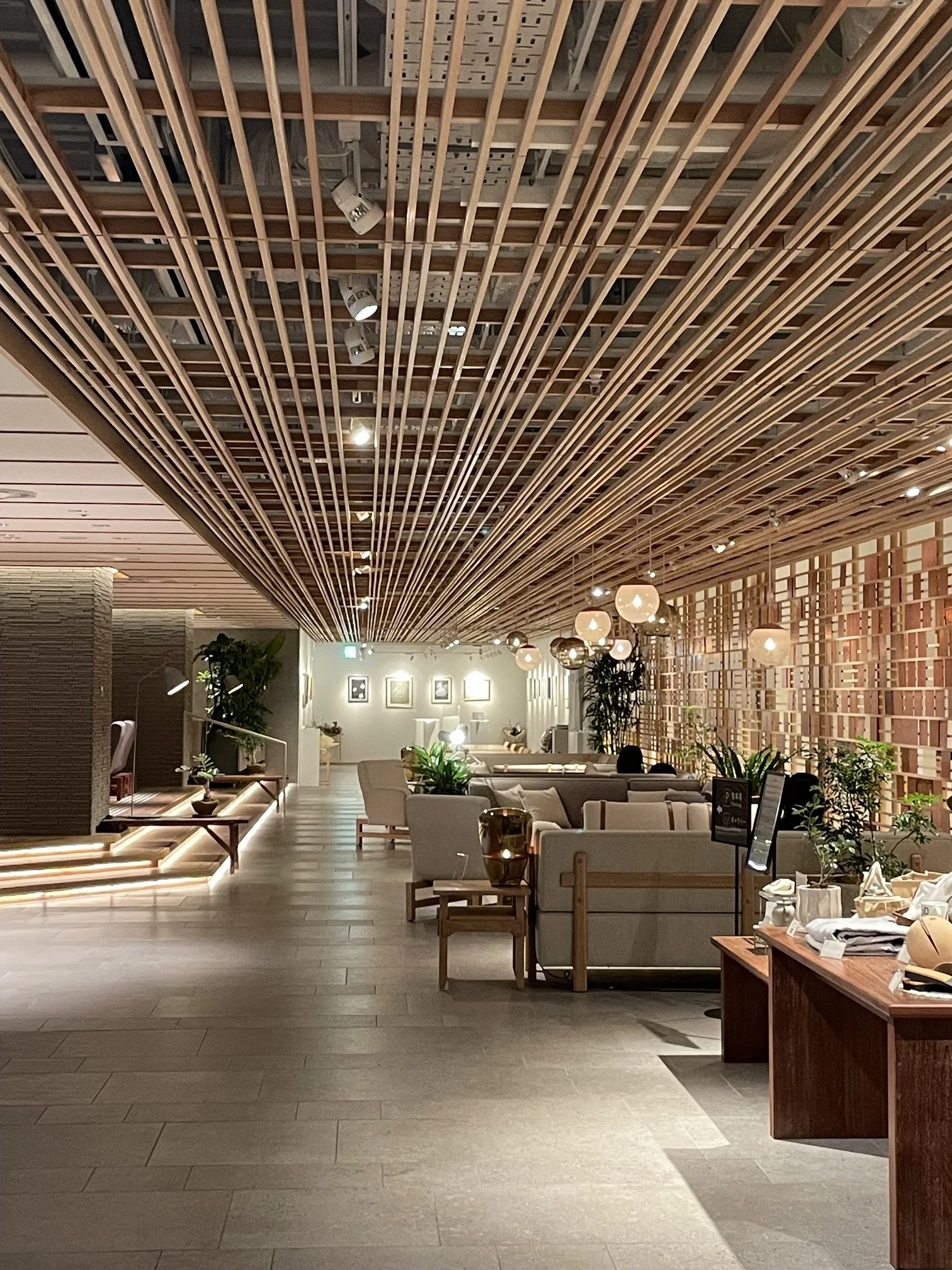
In Kyoto, I chose to stay at GOOD NATURE HOTEL in the Karasuma district (downtown), near NISHIKI MARKET. The hotel and room were beautiful, but the staff wasn’t as friendly, and they didn’t wish me a happy birthday even though I had arrived on the actual day of my birthday. The hotel has a couple of restaurants and a market inside. There’s an amazing restaurant there called CHINESE NOODLES ROKU. It was created by a chef with two Michelin stars and has received a Michelin Bib Gourmand. It is a beautifully designed ramen bar with affordable, elevated, and delicious noodles. NISHIKI MARKET, a short walk from the hotel, had endless amounts of food stalls and shops. I regret not tasting more food there. I just couldn’t decide. I did try the strawberry sandwiches filled with cream, but I didn’t like it as much as the people on TikTok who raved about it. I thought the combination of strawberries and sweet cream with a slice of savory white bread was odd. I think it would have tasted better with a sweet dessert bread. There were great gift shops and restaurants around the market as well. The hotel is very close to the charming PONTOCHO ALLEY, where I went for sushi one night. I originally wanted to stay at NOGHA HOTEL KIYOMIZU because of the rooftop bar, but I thought it might be too far from the shops. The upside is that it is located in a more traditional and classic part of Kyoto, which could also be a great experience. I would consider trying this hotel for next time.
My first day in Kyoto was my birthday, and I was excited to celebrate there. My Uber picked me up in a van and he had a male companion in the front seat with him. In their limited English, they asked me what I was doing that night. I said I was going out to dinner at KOMATSU CUCINA ITALIANA to celebrate my birthday. Immediately, they started singing happy birthday to me and clapping their hands. They may have even played music on their phone to accompany their singing. It was the sweetest thing.
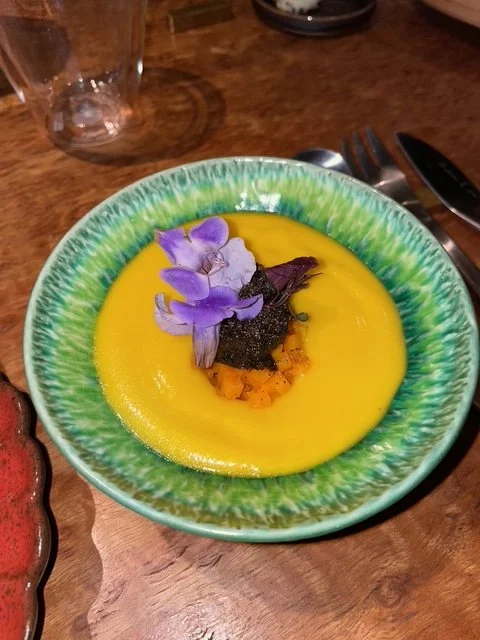
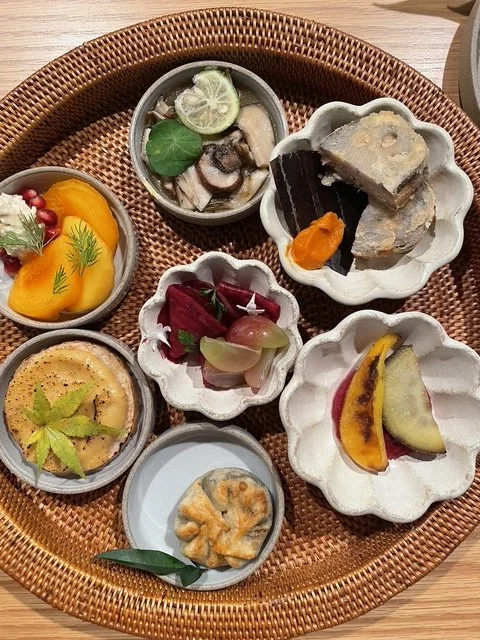
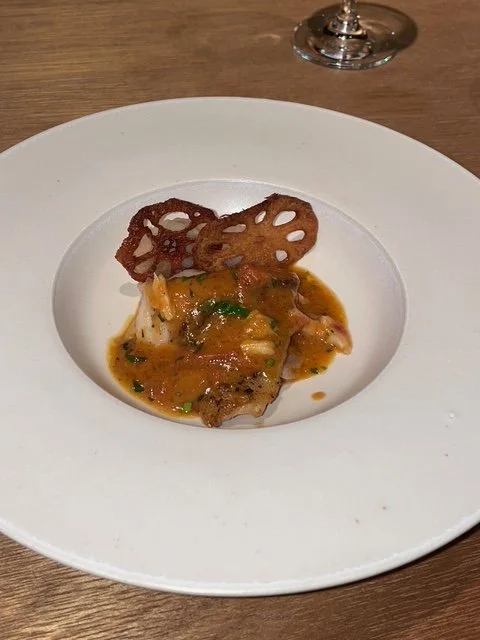
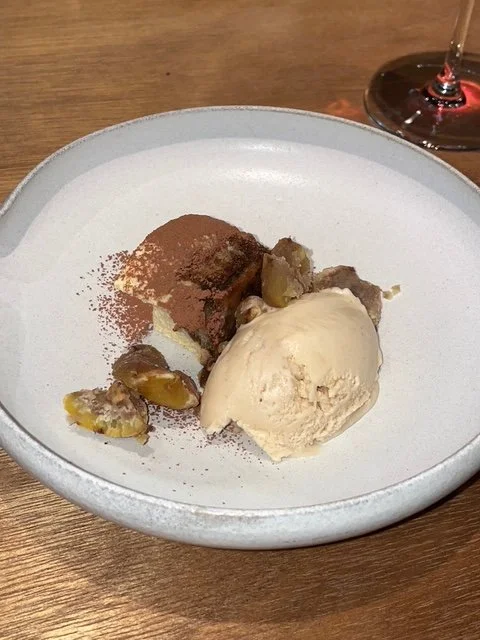
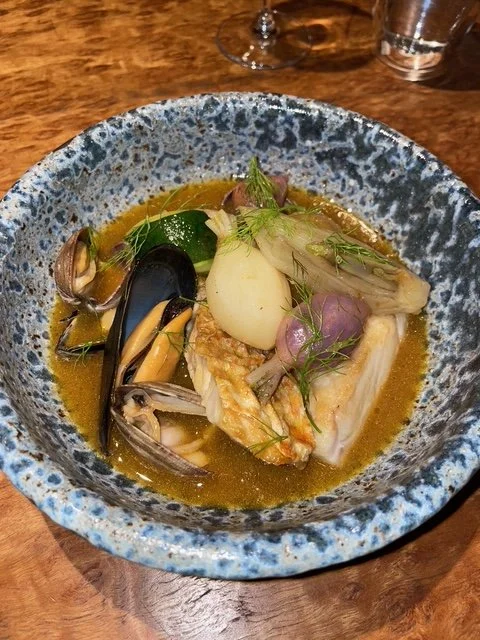
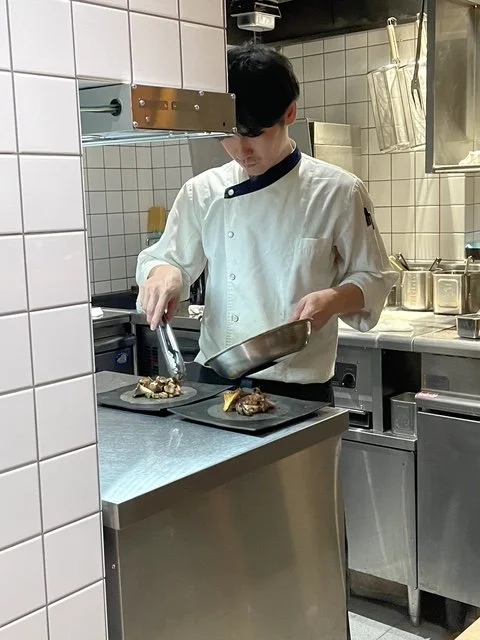
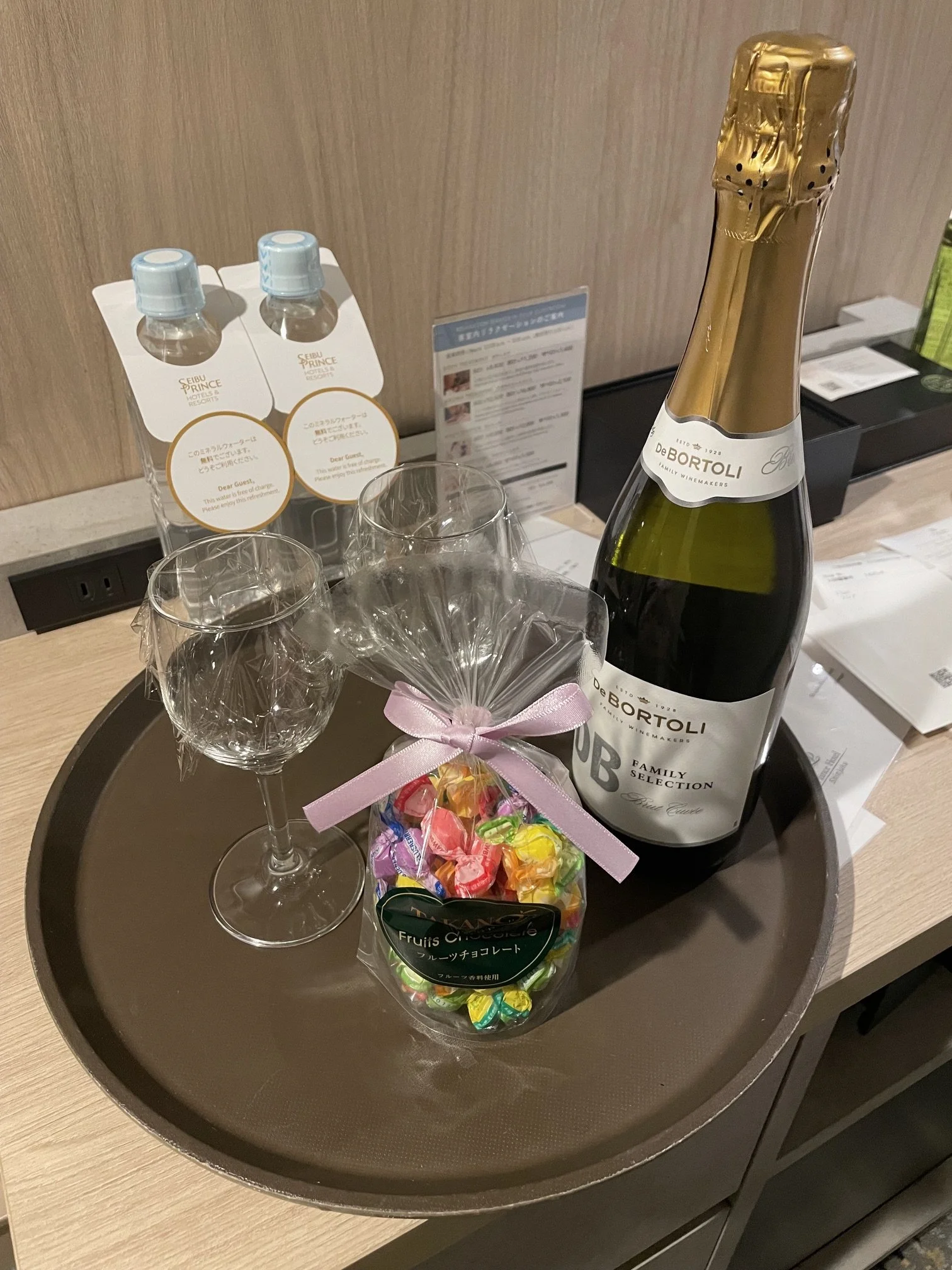
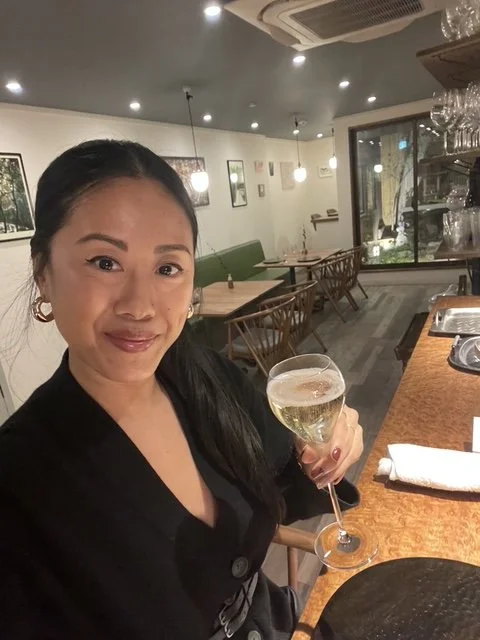
The restaurant was basically a one-room, private kitchen with only counter-bar seating. An older Japanese couple sat near me at the counter bar. The three of us were the only ones dining that night and basically had a private chef. The older lady politely asked me, “Is it okay if I talk to you?” I squealed, “of course!” It was so sweet that she wanted to make conversation. Her husband was friendly, but didn’t speak as much to me. I learned they were in Kyoto on a weekend trip from Osaka. They had dined at the spot before and really enjoyed it and came back. They had no kids of their own, didn’t cook much, and often ate at 7-Eleven. The chef didn’t really speak English, but the lady told me that it was his grandmother’s restaurant and he had inherited it and made it his own and now it’s a Michelin-rated restaurant. It was a delicious 7-course omakase. I celebrated with champagne and the couple wished me a happy birthday. I love Italian food so I thoroughly enjoyed this Italian-Japanese fusion with pasta. Dessert included an incredible tiramisu with chestnut gelato. When it was time for me to return to the hotel, the couple had asked the chef to call me a taxi and walked me out to my taxi to make sure I was okay. They waved goodbye as if I was their own grandchild or friend. It was such a beautiful birthday surprise, shared with strangers in Kyoto. I loved it.
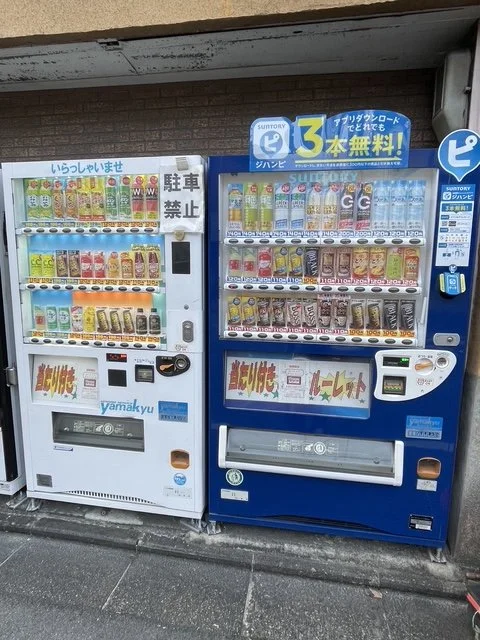
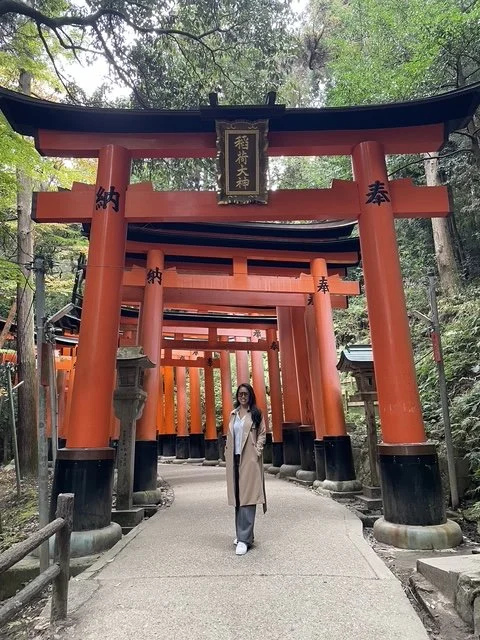
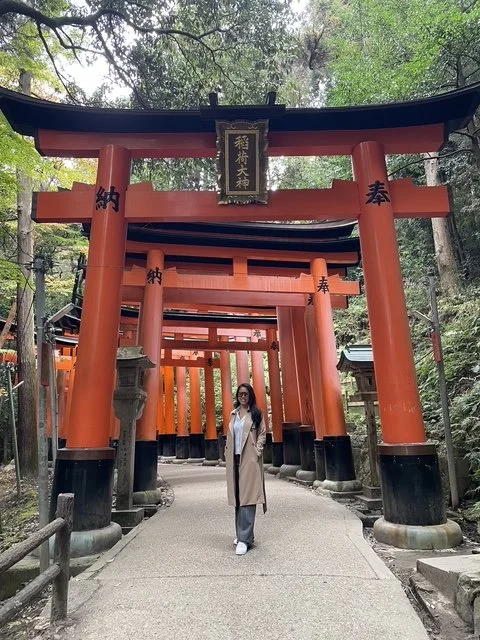
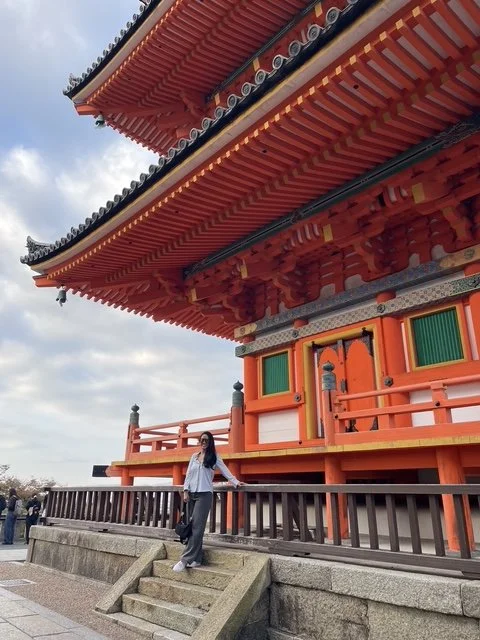
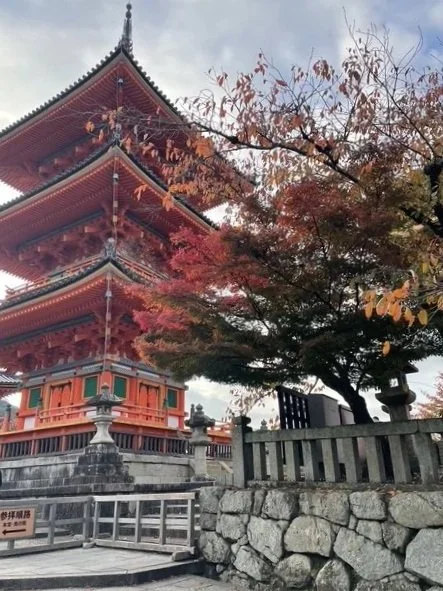
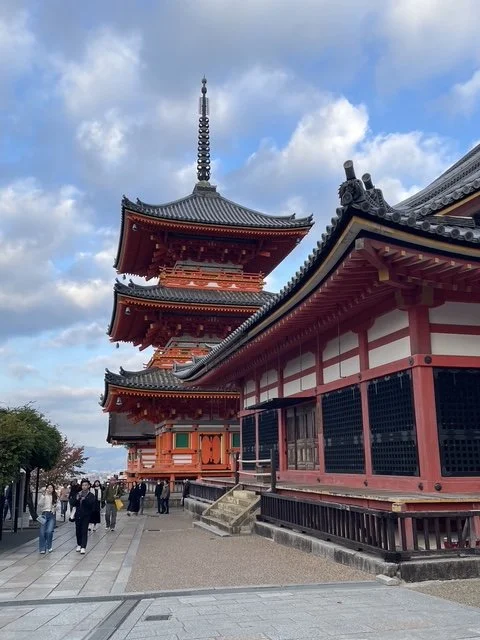
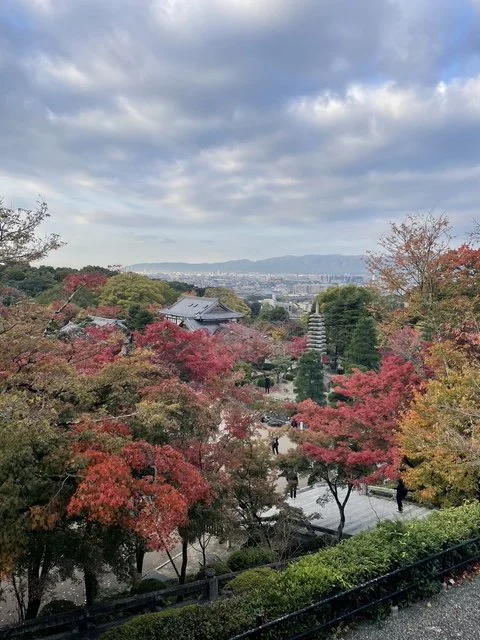
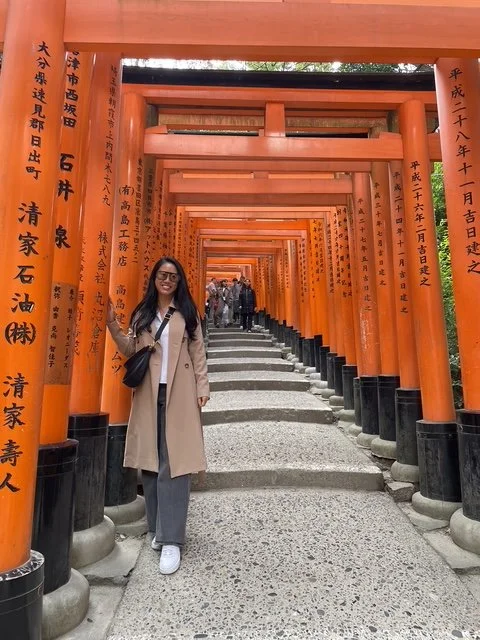
The next day, I decided to go sightseeing. In the future, I would probably stay closer to the geisha district of Gion. It feels more old school Japan and is much closer to the sites that I wanted to see, such as the YASAKA PAGODA and KIYOMIZU-DERA TEMPLE. The temple and view were beautiful. The leaves were orange and added to the perfect autumn vibes. As you wander further into the outdoor temple area, you have to pay to enter a portion of the area that allows you to walk along the mountainside and get a better view. I didn’t do this because I was just on a mission to get as much done that day as possible. I wish I had taken a more leisurely approach though. Outside the temple, there are food stalls if you want a snack. SEIVI MATCHA is also in the area, but I didn’t get to check it out because, like most cafes, it opened later. These spots were still walkable from my hotel, but it’s about 20-30 minutes to the pagoda, plus another 15 minutes to get to the temple from the pagoda. It doesn’t sound that bad, but when you spend all your days walking, it adds up. On the same day, I took the train to FUSHIMI INARI GATES. It was beautiful and a nice little climb up a mountain. Lots of steps, but you don’t have to walk the whole thing to the top of the mountain unless you want to. I didn’t. I was exhausted from this full day of sightseeing.
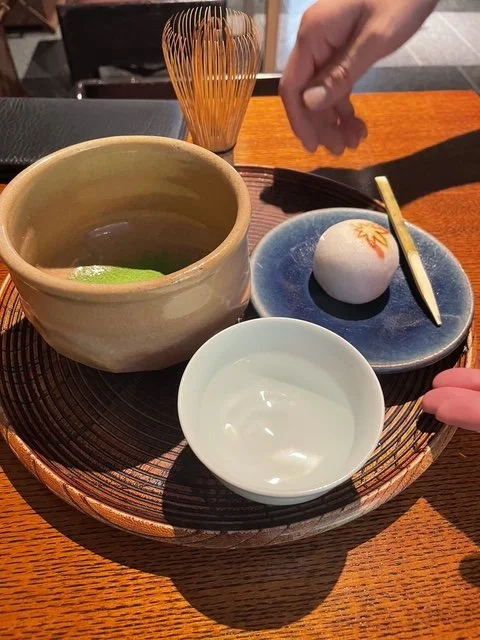
I spent a leisurely last day in Kyoto tasting matcha at different spots. I found that the popular IPPODO shop and cafe were a bit pricey, especially for the cafe. They don’t offer tastings. You have to pay for it in their cafe. I really liked and preferred the matcha at FUKUJUEN. They let you taste the matcha for free before purchasing, and the service was much friendlier than IPPODO. I loved the matcha tins I bought here (about $28-$32 for a 20 gram tin). I also searched for ceramics in Kyoto like a traditional teacup and a matcha bowl, but I found that it was more expensive in Kyoto than in Tokyo (traditional teacups were $25-$40 and matcha bowls were $40-$75, whereas in Tokyo, these items were usually $10-$20). I regret that I didn’t make time to visit KAPPABASHI ceramics district in Tokyo.
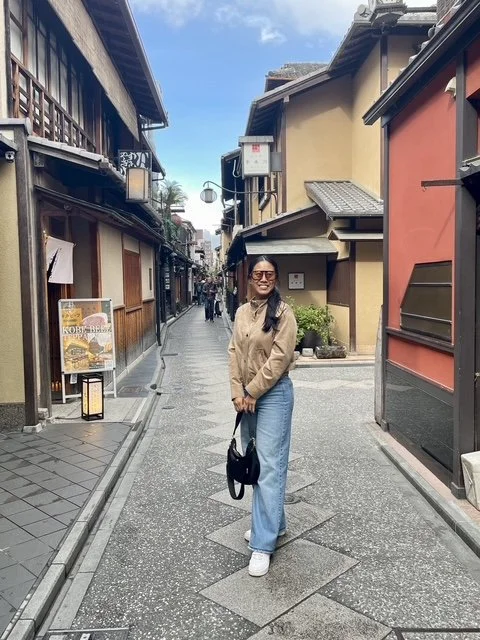
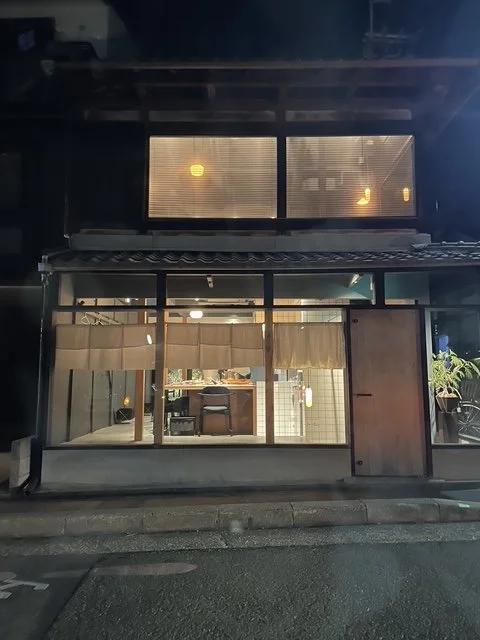
On my last night in Kyoto, I treated myself to a French omakase at L’APARTE, which is located in the quaint downstairs portion of a little house. There were tables and counter seating. I enjoyed a 5-course omakase with champagne. It was so lovely. For dessert, they also served a chestnut gelato. I’m now obsessed with this chestnut flavor. After dinner, I stopped by a prohibition-style speakeasy called BEES KNEES. It was such a fun bar and I made new friends. I did have to wait over an hour though! I walked back to my hotel to wait. It was my last night in Kyoto and I wanted to experience their nightlife. I met a couple guys from Los Angeles actually and a few others from San Diego and San Francisco. Apparently, a lot of us booked the tickets to Japan last minute and got the same deal. A few purchased their tickets months in advance and spent way more than we did.
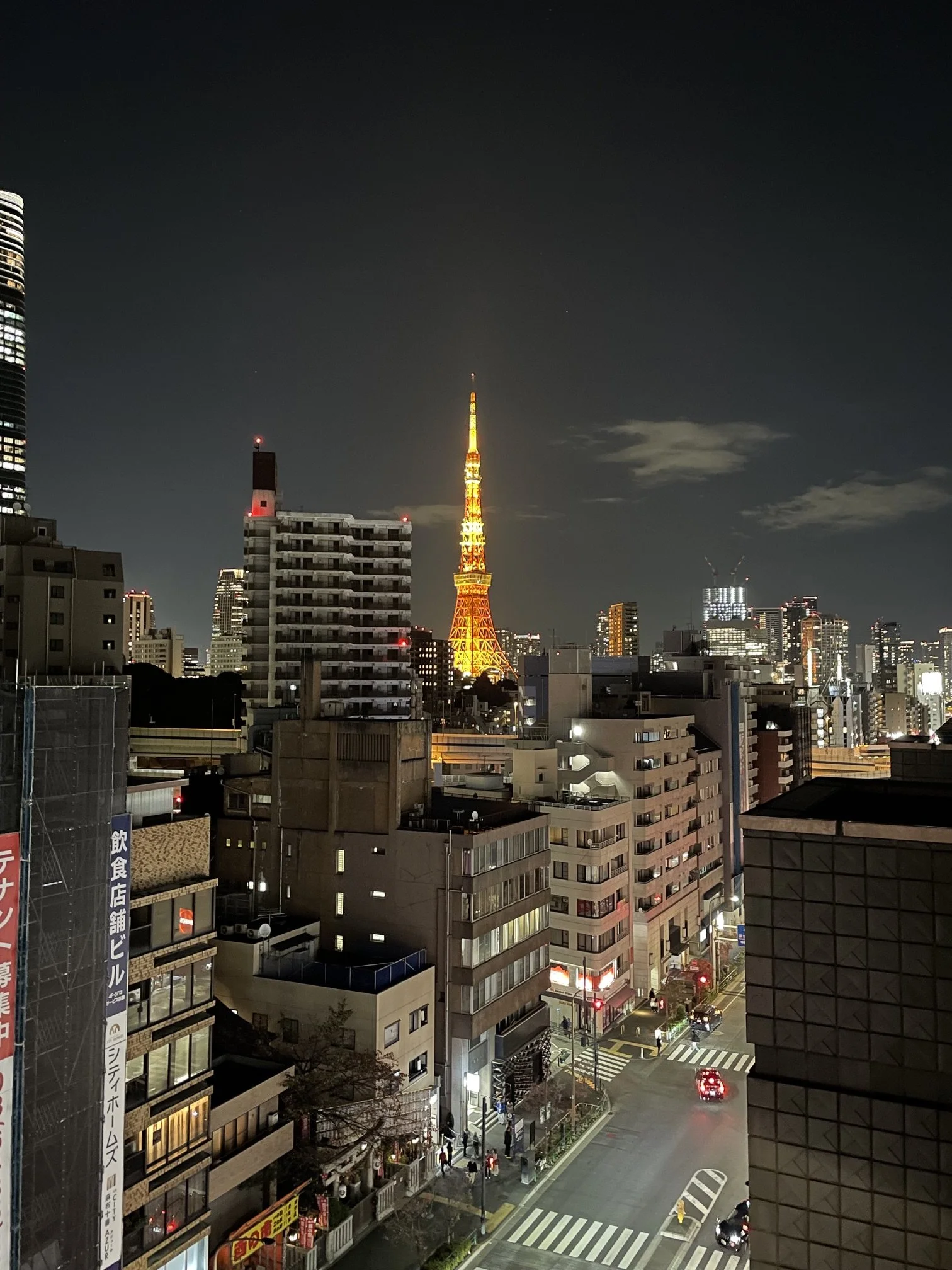
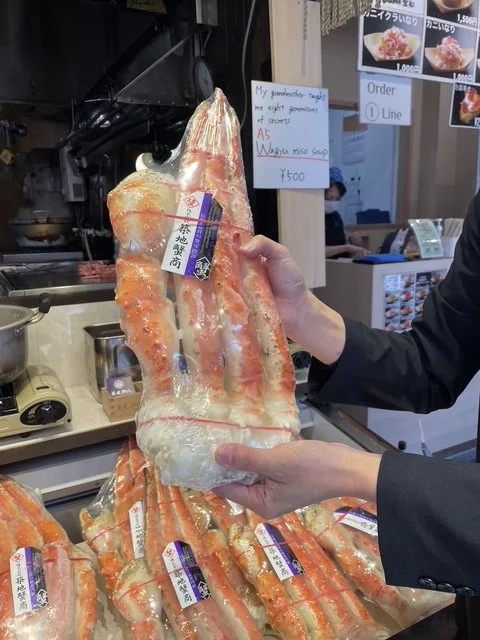
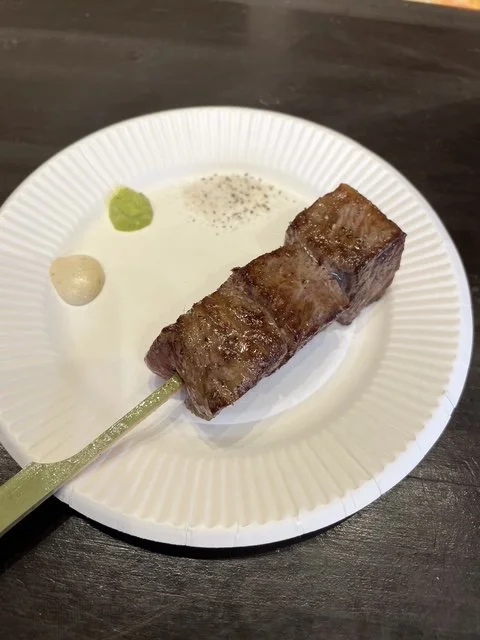
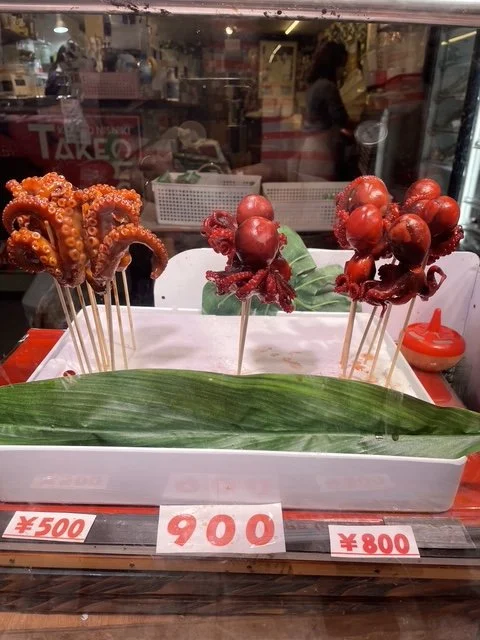
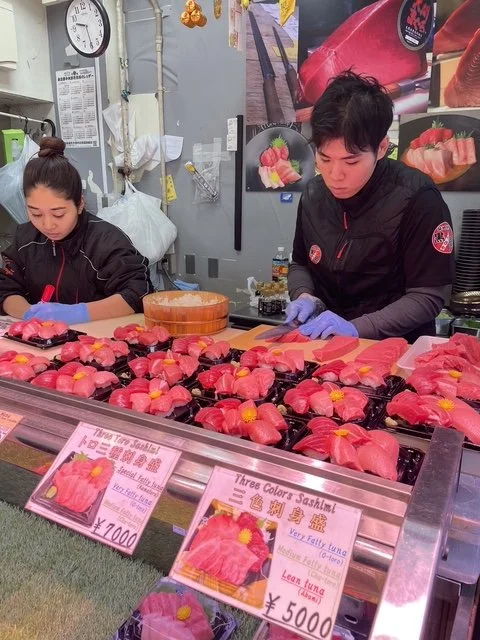
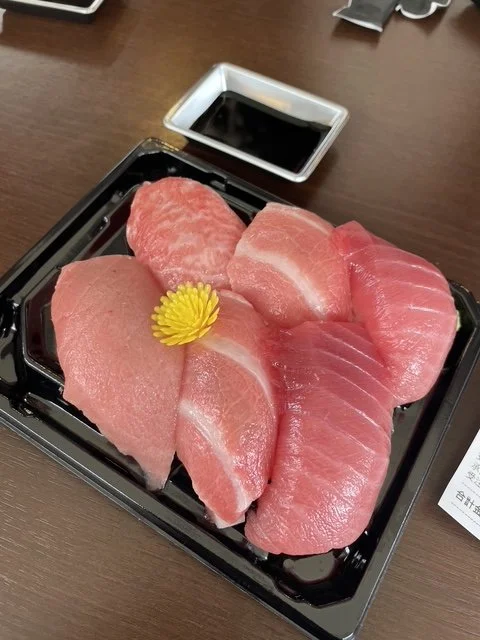
After three days in Kyoto, I returned to Tokyo and stayed in the HOTEL GRAND BACH GINZA for my last night in Japan. Ginza is one of Tokyo’s more upscale districts and is close to the TSUKIJI OUTER FISH MARKET, which is amazing! I had the most delish toro combo and Wagyu steak skewers. Go early though because it closes by 1 or 2pm and the toro counter has long lines. There was also a pretty affordable ceramic shop across from the toro counter. I purchased a ramen bowl for $6 and a smaller bowl for $3.
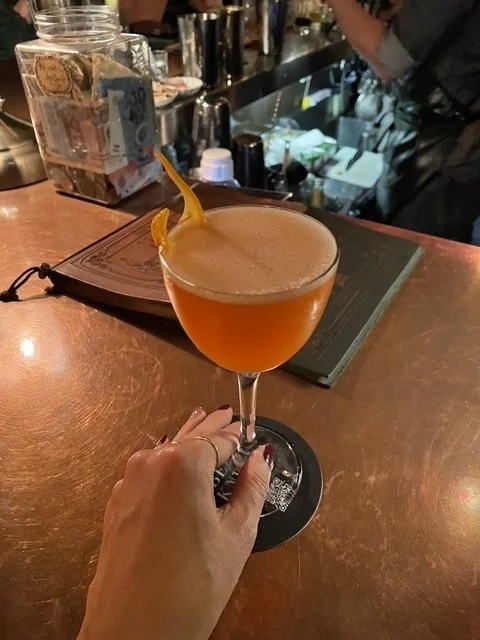
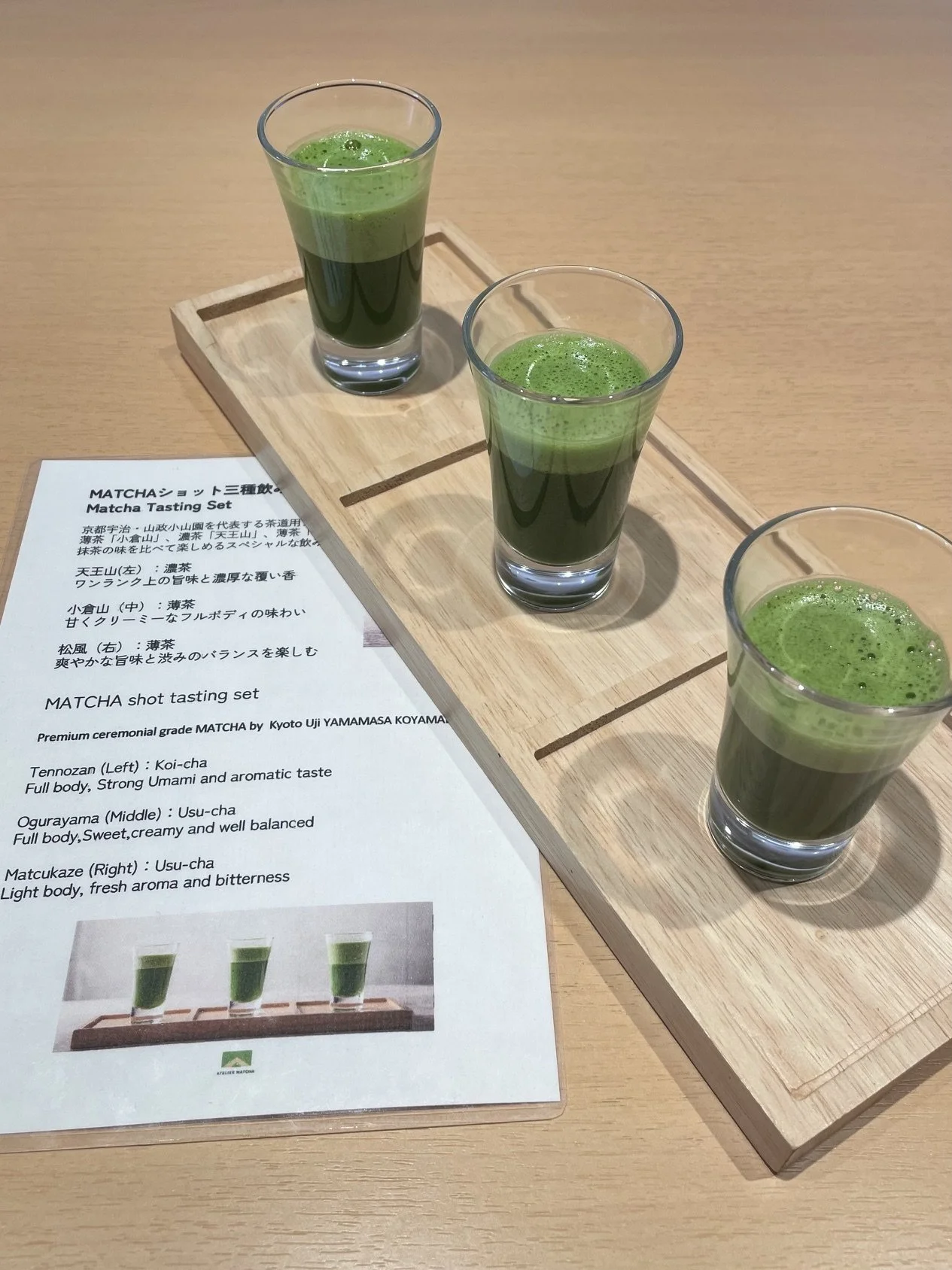
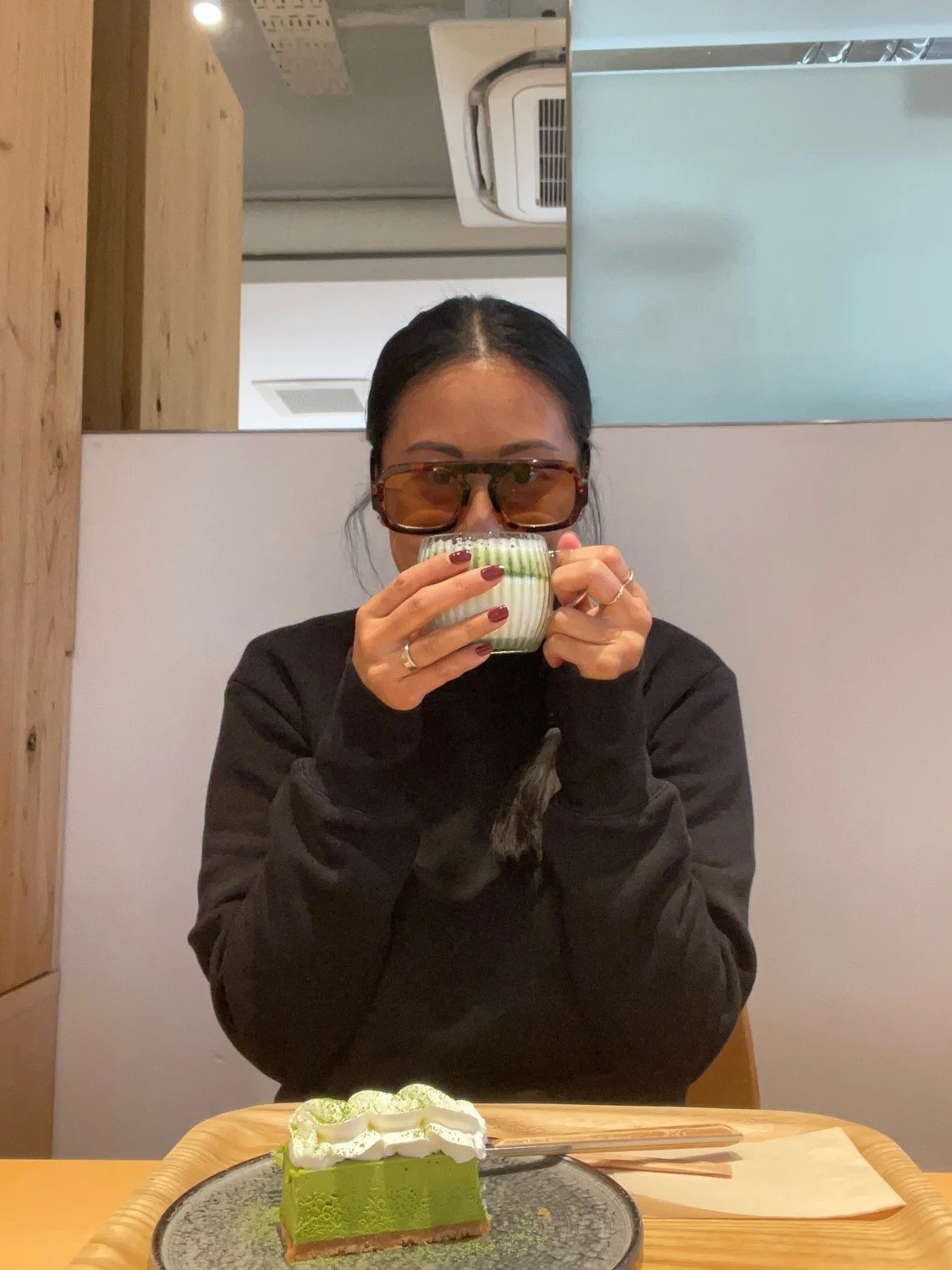
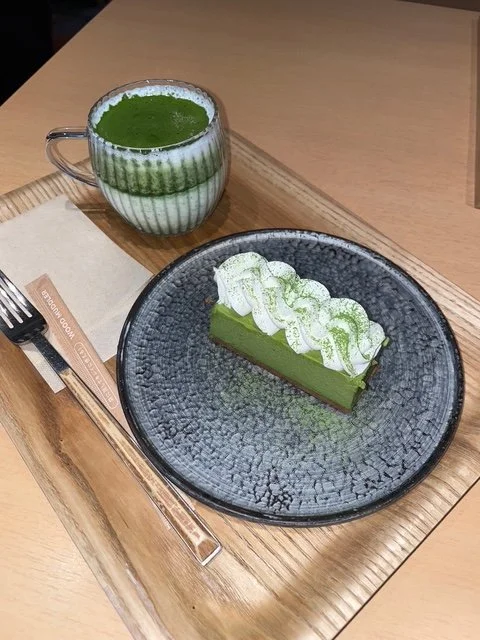
In the afternoon, I stopped by ATELIER MATCHA for a matcha tasting and a slice of matcha cake and it was the most delicious treat! The thing about Ginza is that it’s more for high-end shopping and there aren’t as many late-night food spots. But it’s totally worth staying in this area for the fish market. It’s much calmer and manageable, not as chaotic as Shinjuku. There were a couple IPPUDO ramen locations in Ginza that were easy to get into. I wanted to try GINZA HACHIGO, but I didn’t have a reservation. I spent my last night in Tokyo grabbing an early dinner at a restaurant the hotel recommended with the only availability. Then I got drinks at TOKYO CONFIDENTIAL. I stopped by early, so I was able to get in for a cocktail without a reservation. Generally, though, you need one, especially for a group. Next time, I’d probably stay in Ginza again or in any of the neighboring areas outside Ginza.
To get to the airport at the end of my trip, I decided to Uber (about $50). There were no airport shuttle buses available in Ginza like there had been in Shinjuku. I could have taken the train. It didn’t seem that complicated, only one transfer, but I had a large suitcase and several extra bags at that point. I was too exhausted. And even though the train ride may have sounded simple, some of the train stations are a maze to get through to find the right connection and I didn’t have the time or energy to risk getting lost carrying around multiple bags.
During my entire trip, I thought of the LOST IN TRANSLATION movie, and more recently, OH LUCY! (fantastic movie featuring Josh Hartnett as a supporting character). When I visited Japan the first time fourteen years ago, I had eaten at the izakaya featured in the movie Kill Bill. It was big and lively! But we sat upstairs in a quiet room eating sushi instead of downstairs eating skewers with the crowds. I would have preferred downstairs, but I didn’t know when I made the reservation. We had also visited the fancy hotel bar featured in Lost in Translation. I don’t remember much about it except that it was dark and moody, and they had a really nice, fancy toilet 😂 Anyway, see below for a shorter version of my travel tips.
TLDR - Japan Travel Tips & Things I learned:
Hotels:
General Info:
Japanese toilets are amazing! Heated seats, bidet functions, and even ambient sounds. I miss them!
Hotels don't always provide body lotion, so bring your own.
I didn’t find the concierge service to be that helpful with restaurant recommendations, train tickets, or with luggage. I don’t think they offered to help with luggage once. I’m not sure if this is a cultural thing there though.
Tokyo:
The Prince Hotel - It was a good budget hotel with friendly staff and service, but I’m not sure I would stay here again. Even though I enjoyed the experience, I don’t think I’d want to stay in the chaos of Shinjuku again.
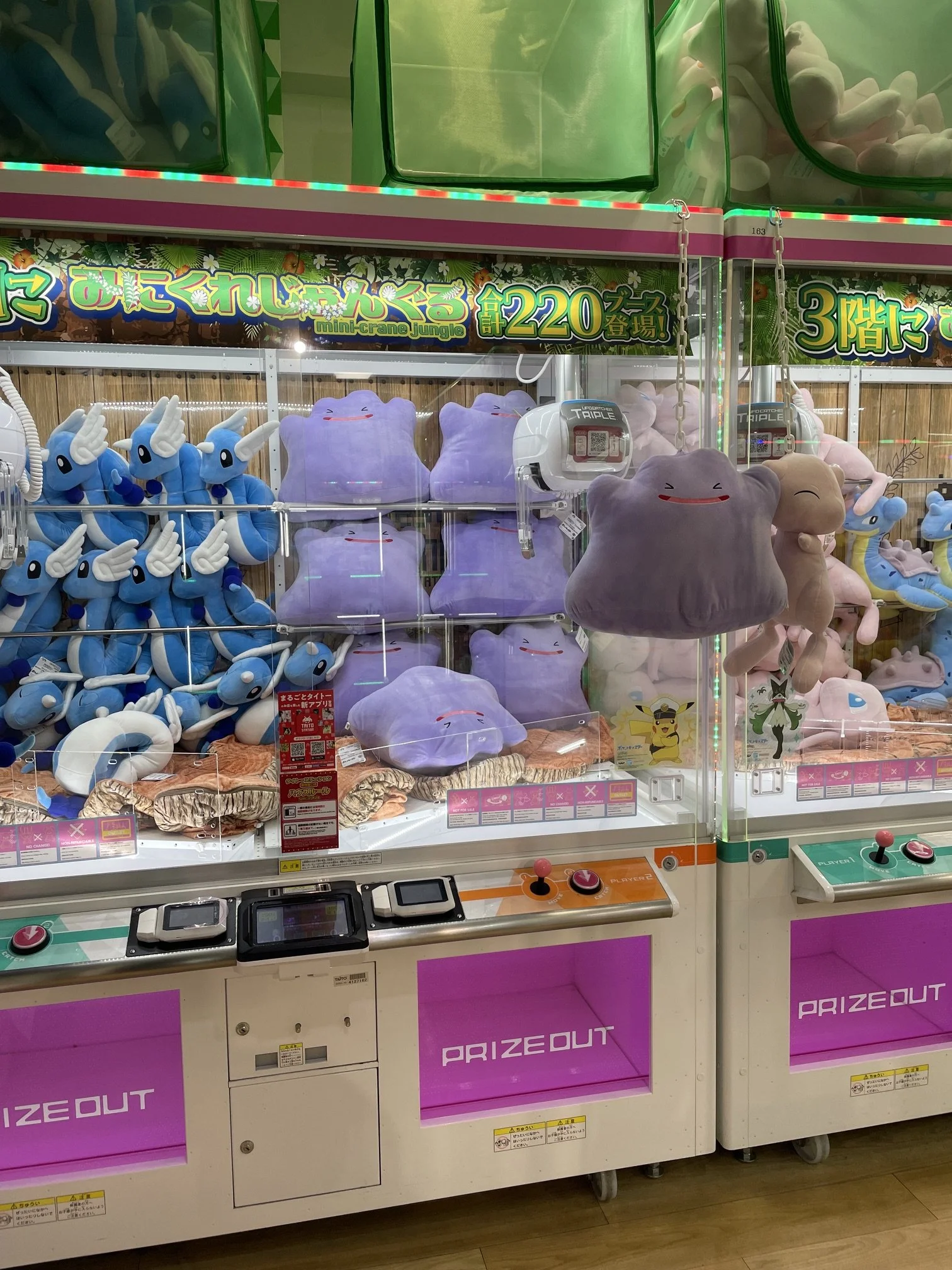
HOTEL GRAND BACH GINZA - I’d definitely stay here again. Prices were reasonable, and it was a really nice hotel. Ginza is an upscale neighborhood, so there aren’t as many local food spots open late at night, but the trade-off is that it’s not as chaotic. It’s also within walking distance of the TSUKIJI OUTER FISH MARKET, which is very convenient. If I stayed there again, I’d probably walk to the fish market every day for lunch. Plus, in addition to their upscale shops and vintage shops, they have a lot of affordable kid-friendly gift shops like DON QUIJOTE and Pokémon Store and Cafe.
TOKYO GINZA EDITION HOTEL - I would love to stay here next time. But I would also be open to staying in the neighboring areas close to Ginza as well.
Kyoto:
GOOD NATURE HOTEL - I would definitely recommend staying here. It’s within walking distance to NISHIKI MARKET and PONTOCHO ALLEY.
Next time, I’d like to try NOGHA HOTEL KIYOMIZU in a more traditional Japanese neighborhood or stay at a hotel near Gion to be closer to the sights and experience more of the old-school Japan vibes.
Transportation & Getting Around:
After arriving in Tokyo, I booked a bus for $9 into the city from a booth near the airport exit. I preferred this over lugging my suitcase through the city to a train station and switching trains. It took me directly to my hotel neighborhood in Shinjuku. Conveniently, they have options to purchase separate buses for different neighborhoods in Tokyo.
Train stations can be overwhelming and confusing. If the ticket machines intimidate you, look for a ticket office within the station and ask an agent about purchasing a SUICA train card.
SUICA cards are easy to use and to reload with money at machines. You can also use them to pay for food at places like 7-Eleven.
It was pretty easy traveling via train locally. The trains are so clean and quiet. People keep to themselves. They also wait in line to get in. It’s very organized, with no pushing or shoving.
If possible, use the Yamanote line for convenient routes around Tokyo.
You can purchase Shinkansen tickets last minute. This fast bullet train takes about 2 hours and 15 minutes to get from Tokyo to Kyoto and costs almost $100 one way, including a reserved seat. You can reserve seats in the limited oversized-bag sections at the back of a train car, which have designated luggage space behind the seats, but reserving those specific seats is not required. You most likely don’t need the oversized-bag seats unless your bag is truly oversized. Most regular checked suitcases fall under their 160 cm threshold. There also aren’t as many of those seats available on each train. You can use the communal luggage area upon entrance. I saw people lay their luggage sideways in the entryway so that it wouldn’t roll. Large suitcases also fit on the shelves above the seats, but it can be difficult getting it up there unless you have help. I’ve heard they have affordable luggage forwarding services that ship your luggage to your destination without having to worry about carrying it with you. If you’re traveling with a small suitcase, you probably don’t need to pay extra to choose a seat, though the price difference may be minimal. You could just show up early to grab a seat in the non-reserved train cars. You may want to purchase a bento box or snack in the station to eat on the train.
When arriving in Kyoto and grabbing a taxi, DO NOT stand in the foreign friendly taxi line. It might look shorter, but very few taxis stop in that line. It will take much longer to get a taxi. Wait in the longer regular taxi line. Even though the line may be long, it will move very quickly. I made the mistake of standing in the foreign friendly line (even when people in front of me gave up and left) and I waited more than 30 minutes with only three or four people in front of me because so few taxis were stopping in that line.
I mainly got around using the city trains and walking. I used taxis/Ubers mainly for the 2 nice restaurants in Kyoto that were further away from the hotel at night, to get to the hotel from the train station after arriving in Kyoto, to get to the hotel from the Tokyo train station after returning from Kyoto (vs figuring out the city train connections with my large luggage, even though it wasn’t too far), and to get to the airport from Ginza at the end of my trip.
Upon arrival in Tokyo, it was easy to purchase a bus ticket at the airport to get directly to Shinjuku, especially since my hotel was in a central location. But at the end of my trip, I was staying in Ginza, and there was no option to catch an airport bus from there. I could have taken the train to the airport, which I think would require me to switch trains once, but I was just too exhausted by the end of the trip, and I was carrying around extra bags at that point. So I decided to Uber to the airport instead.
Phone Data & Staying Connected:
Consider an eSIM like Airalo as an alternative to your carrier's international roaming plan.
If you don't have international data, you can sometimes connect to free Wi-Fi outside cafes. I did this when I got lost.
If you go without data, plan your routes in advance and take screenshots of directions before leaving your hotel.
Food, Restaurants, & Bars:
General Info:
Reservations are highly recommended for dinner because most restaurants are small with little space. Even local spots that were larger turned me away.
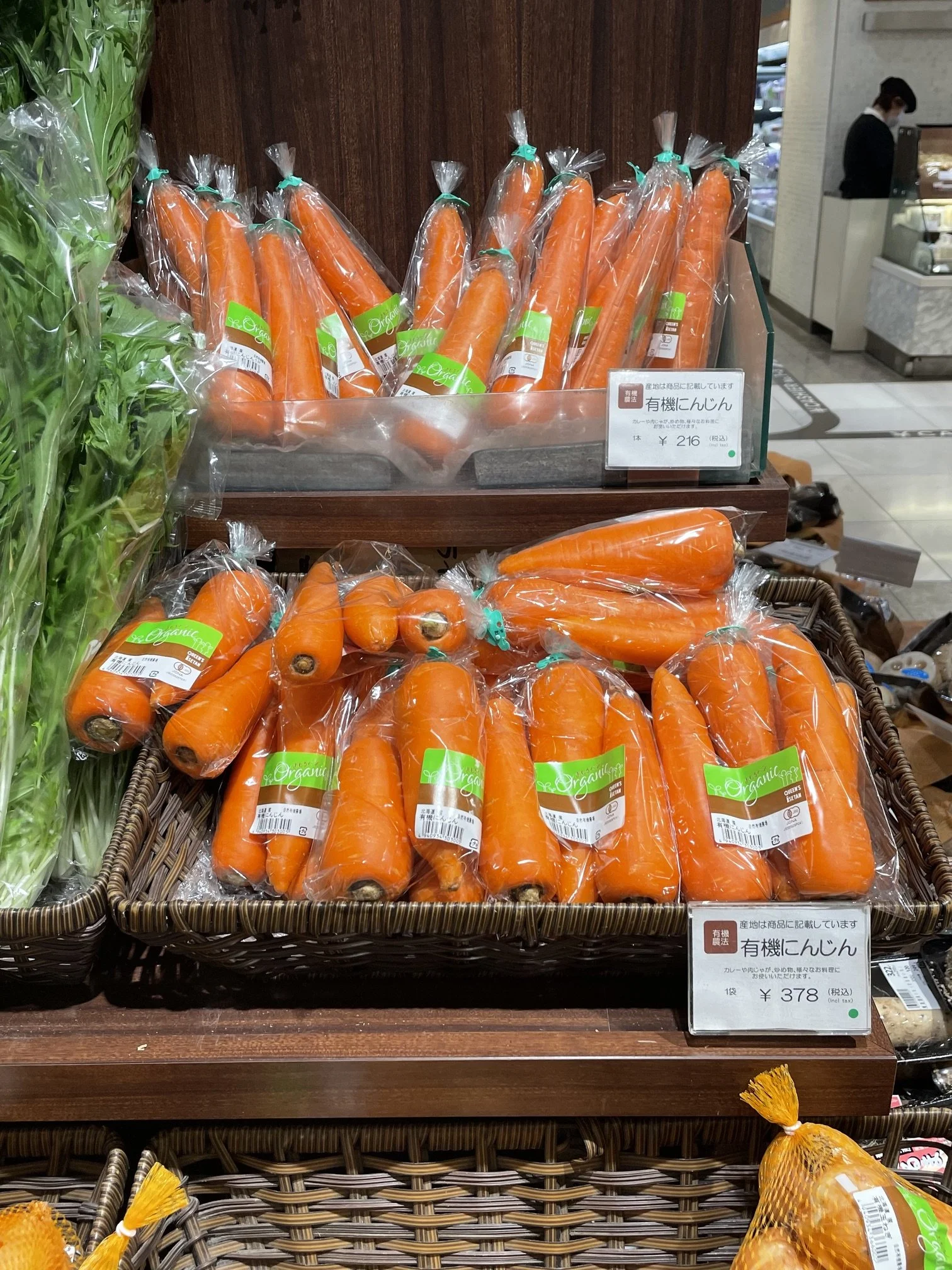
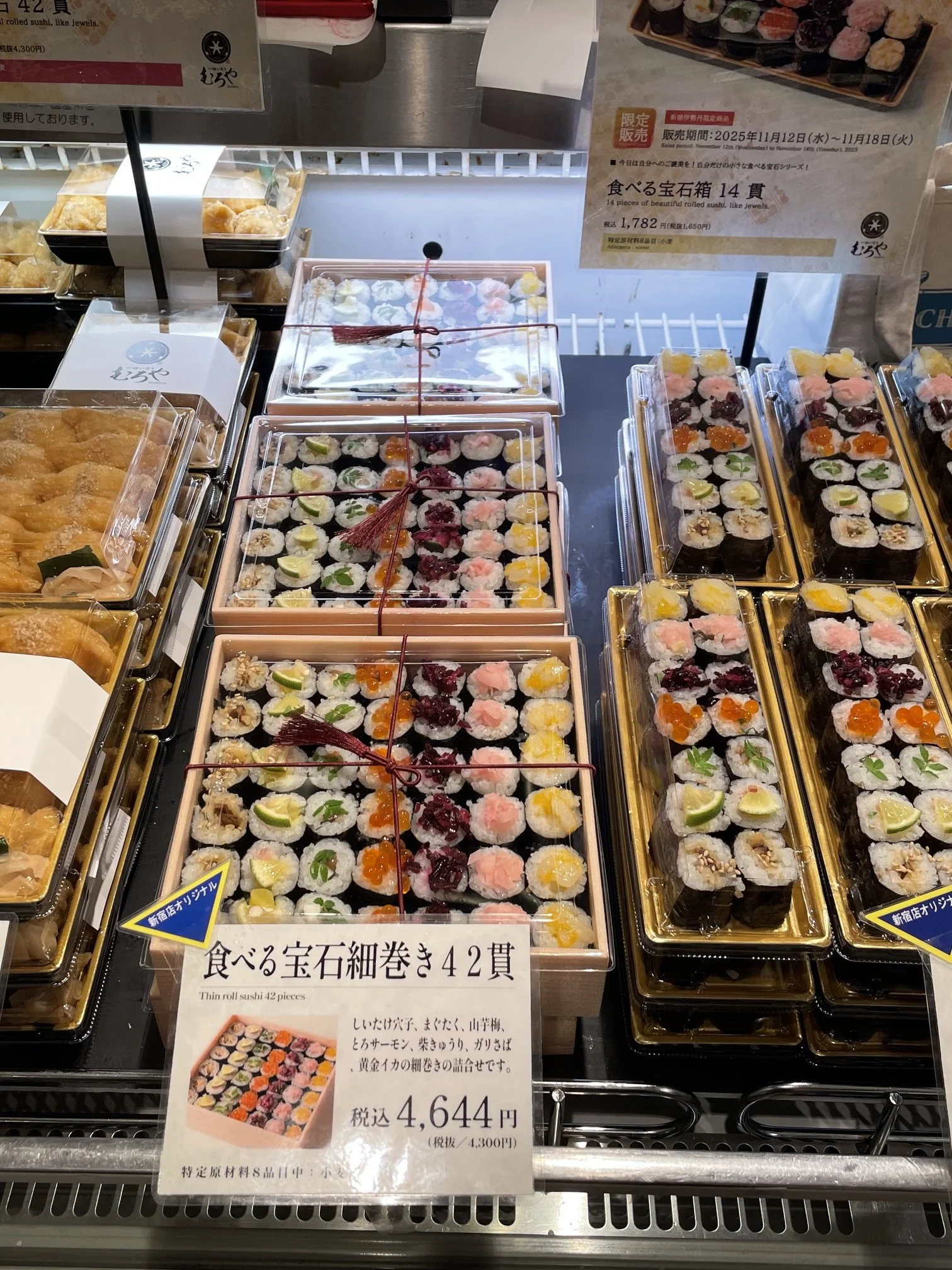
Major train stations are connected to food halls or have food stalls inside them. The basements of department stores have food markets with a variety of options, even little grocery stores. Everything is neatly packaged and prepared. Great for takeout.
Get breakfast at 7-Eleven because most places don’t open till 10am or 11am. They will microwave any hot foods for you too. Try all their sandwiches, esp. the pork cutlet, ham and cucumber, egg sandwich, and the chicken teriyaki.
Try not to get overwhelmed by all the options. If you don’t have reservations, choose a food stall or local place and give it a try. Otherwise, you can end up waiting too long, getting hangry, and running out of energy to decide. Take advantage of getting snacks and drinks at 7-Eleven.
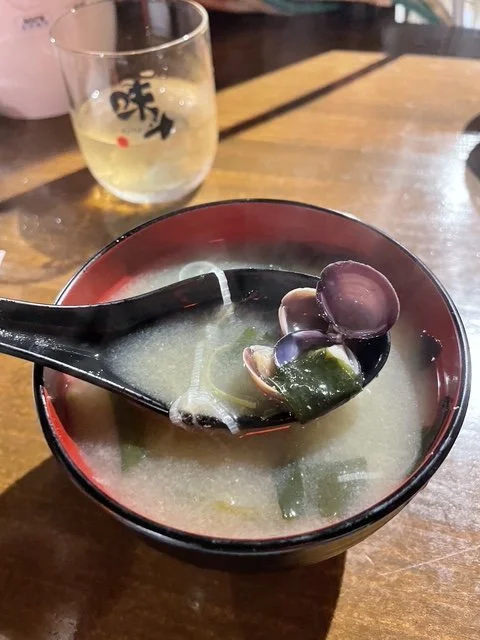
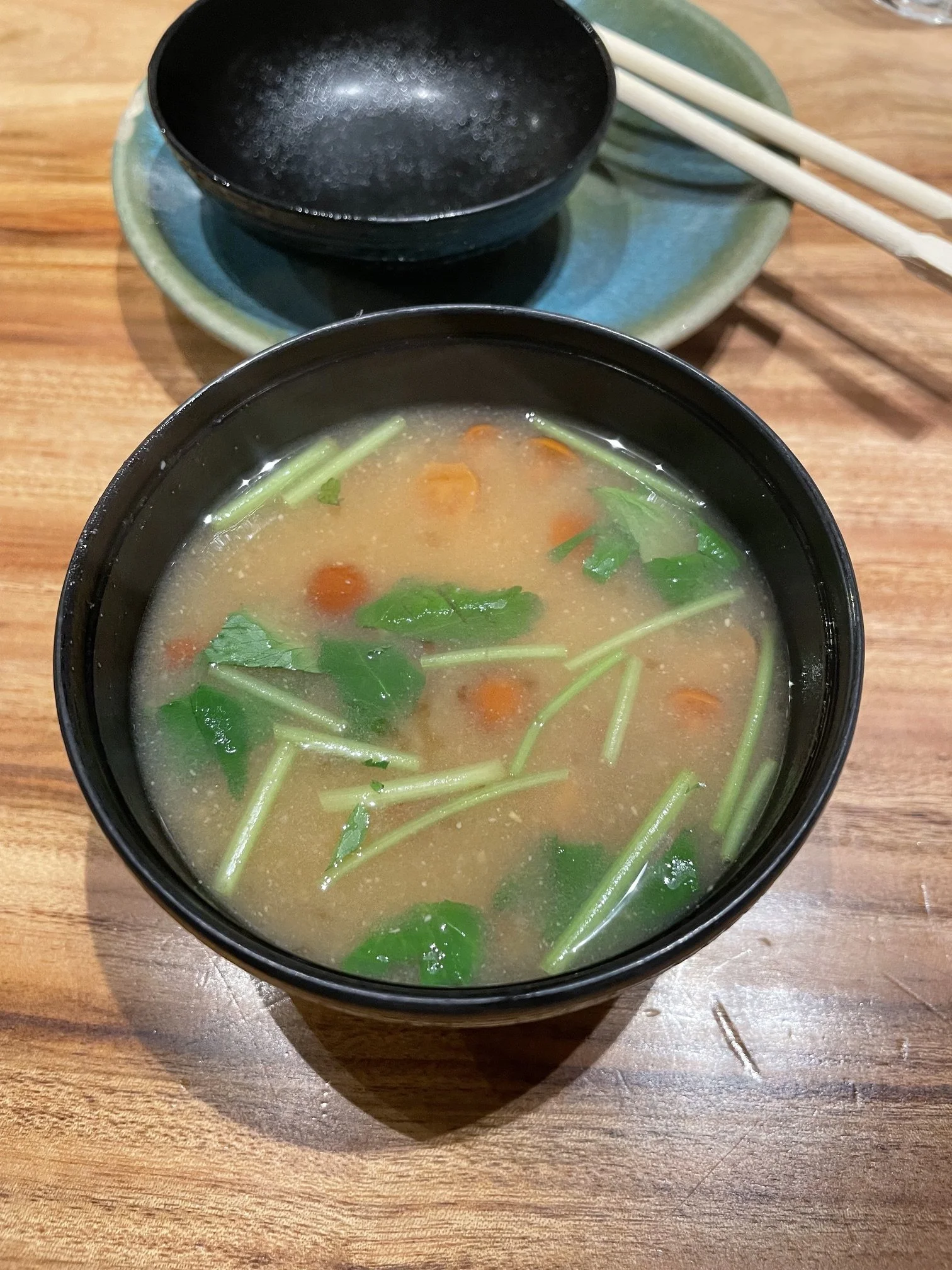
Ramen and miso soup were served extra hot, just the way I like it. Miso soups tasted even better here!
Tokyo:
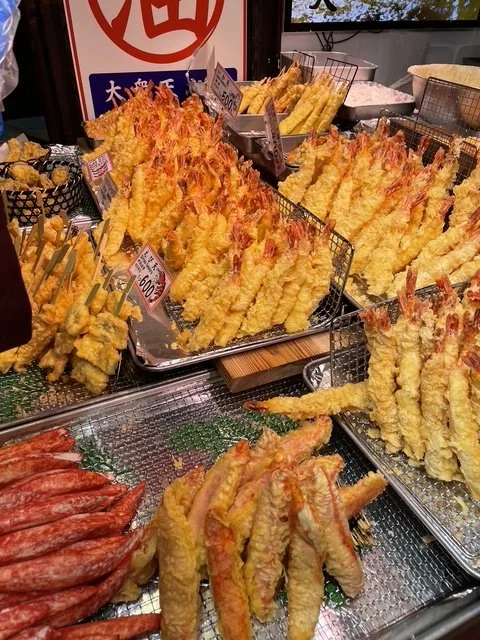
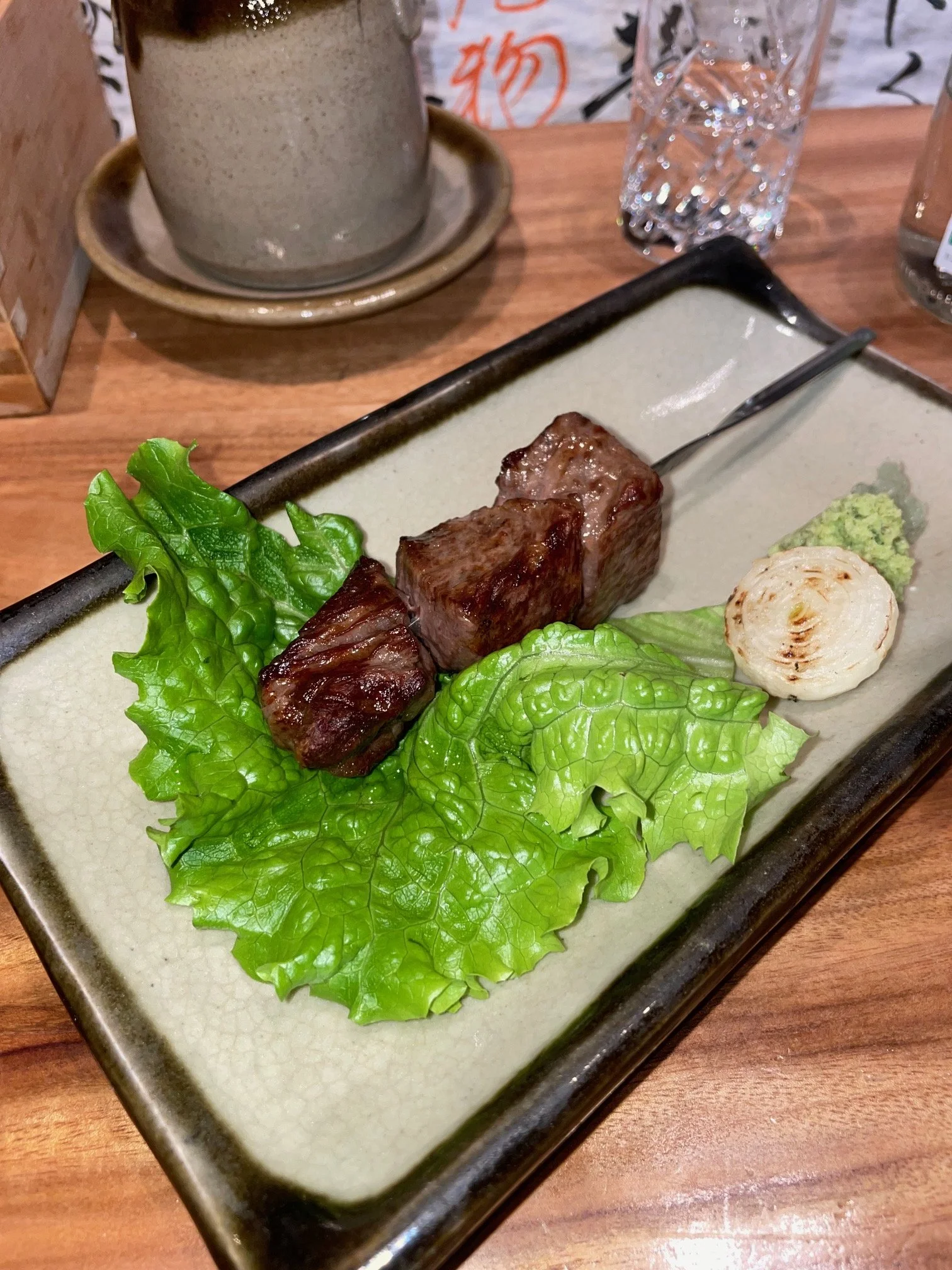
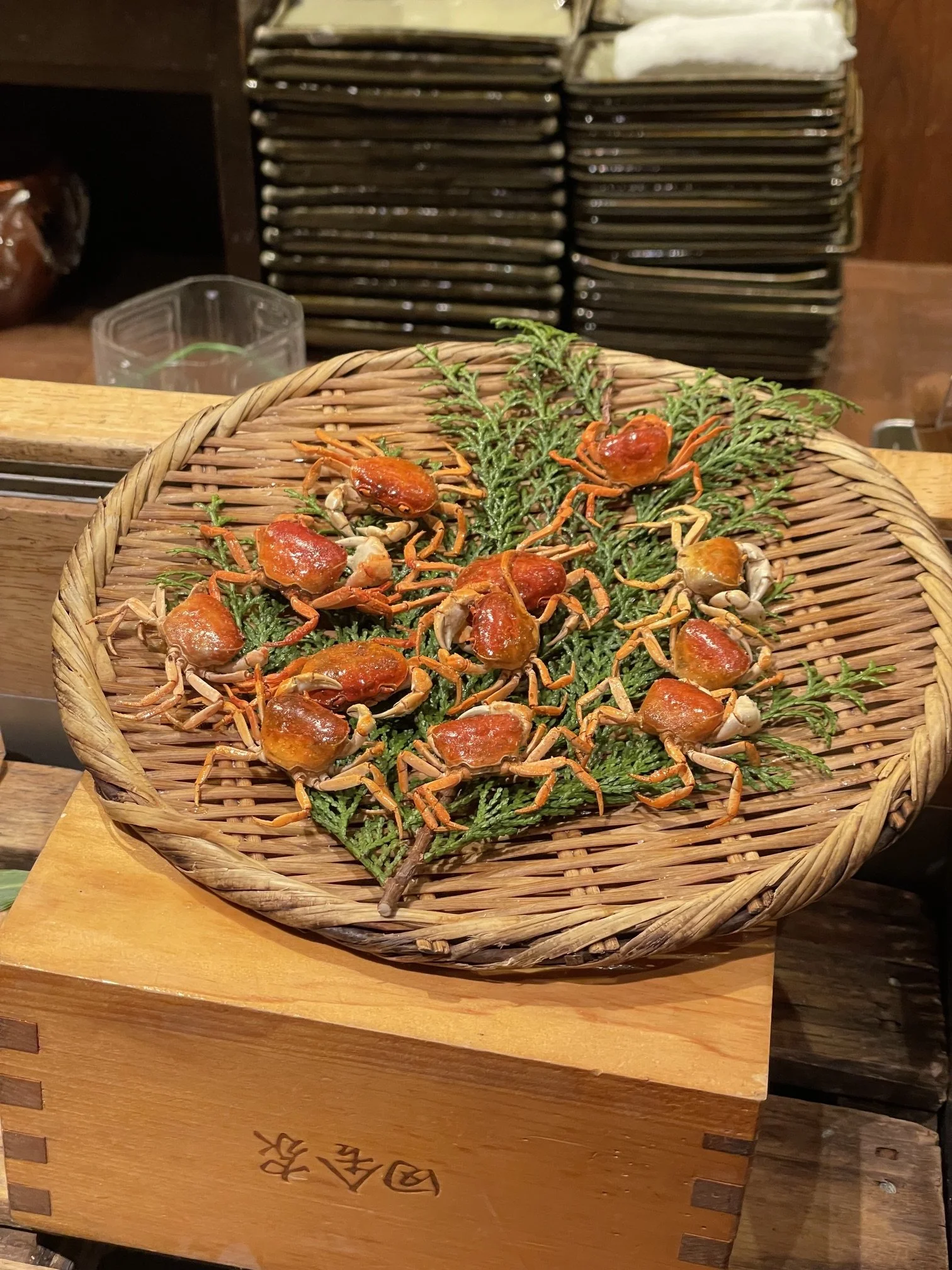
TSUKIJI OUTER FISH MARKET - Definitely get A5 Wagyu melt-in-your-mouth skewers (3 pieces on a skewer for about $22) and a 6-piece toro belly nigiri combo (full fatty, med fatty, and reg fatty tuna for about $25). I waited in line for almost 30 minutes to get the toro belly nigiri combo and it was worth it! The tamago on a stick and snow crabs looked good too! The market closes by 2pm, so plan accordingly. If you’re staying close by in Ginza, you might want to go more than once.
RAMEN - Don’t bother going to the ICHIRAN ramen chain, known for their solo booths and curtains (though people will still go in groups and talk between booths). You might have to wait 45 minutes to over an hour for a table during meal times. Go to IPPUDO ramen chain instead or TATSUNOYA. Ramen is about $8-$10 depending on what you select and add to your bowl. You don’t need a reservation for these casual ramen spots.
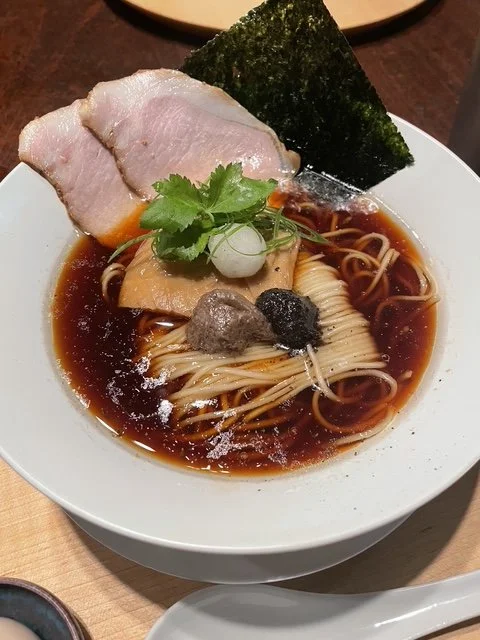
FANCIER RAMEN - I didn’t get to try this fancier ramen spot because it requires reservations, but I wanted to share it with you. GINZA HACHIGO RAMEN in Ginza has a Michelin Bib Gourmand and is known for their consommé broth, blending Japanese style ramen with French fine-dining techniques. The tiny restaurant offers an elevated intimate setting. Another ramen spot on my list known for their truffle-infused shoyu ramen is SOBA HOUSE. It’s located in Shinjuku and also has a Michelin Bib Gourmand. It’s casual and modern, and it does not take reservations. Instead, you have to show up early to grab a lunch ticket that allows you to scan the QR code to register your phone rather than waiting in a physical line. You will then be notified when your seat is ready.
FANCY DINNER - I didn’t get a chance to have a fancy dinner in Tokyo because, as I mentioned, I booked my trip last minute. But here are some options on my list: BOTTEGA in Shibuya and PRIMO PASSO in Ginza. Both restaurants are Italian-Japanese and have 1 Michelin star. Omakases are between $110-$150.
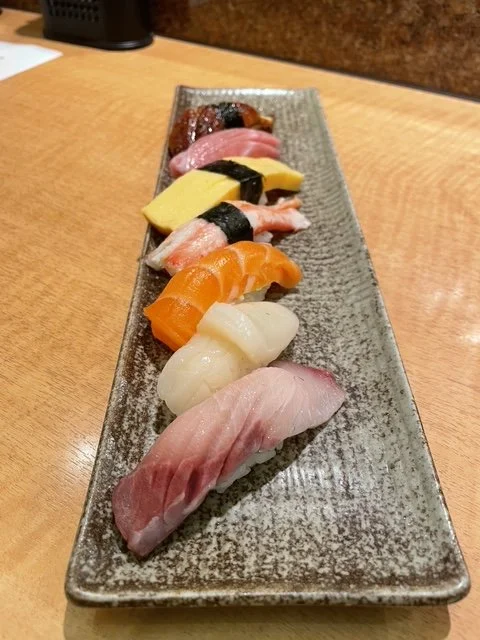
SUSHI - Next time, I would reserve a spot to enjoy a sushi omakase. I didn’t get to try all the food I wanted and I spent a lot of time eating ramen. I think I only had sushi twice during my entire trip, once at a random average place in Kyoto and then just the toro stall at the fish market. Some sushi places I had considered: SUSHIDOKORO KIRAKU (1 Michelin star, a little pricier, in Kyodo), TAKUMI TATSUHIRO (1 Michelin star, pricier, in Shinjuku), SUSHIDOKORO SHIGERU (Michelin Bib Gourmand, in Shinjuku, does not accept online reservations or have a website, TableEx helps you coordinate the reservation), SUSHIYA HAJIME (Michelin-rated, pricier, in Shinjuku), SUSHI BAR NIGIRITE (casual, walk-in available, in Shinjuku), SUSHI KOURIN (former Michelin Bib Gourmand, casual, in Shibuya, doesn’t have an official website but you can book a reservation via TableCheck), and GINZA TOYODA (Michelin-rated, pricier, in Ginza).
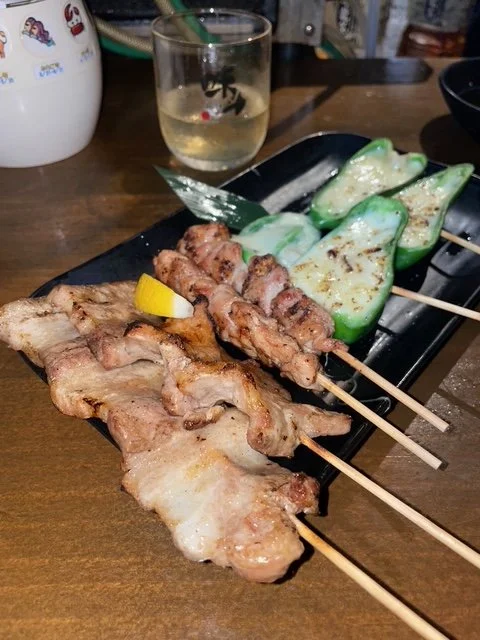
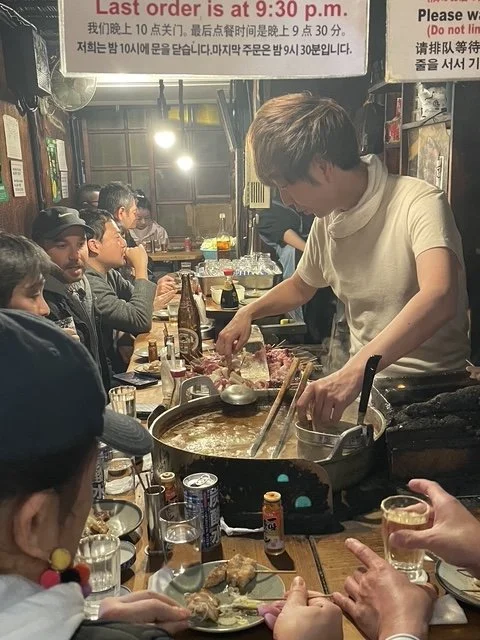
IZAKAYAS - Izakayas are fun because of the skewers and pub vibe, but make a reservation! I stumbled upon one and got in by luck, but I was turned away from my first few choices. These were a few places on my list: YOROZUYA OKAGESAN, KYOMACHI KOISHIGURE, and WARAYAKI-YA Shinjuku (West Exit) all in Shinjuku.
OTHER - I would have loved to try TOGASHIYA ONIGIRI and PIZZERIA MARUMO (reservation needed) in Shibuya.
Kyoto:
For a special experience, I recommend CHINESE NOODLES ROKU (Michelin Bib Gourmand, supervised by a two-Michelin-starred chef), a French omakase called L’APARTE, and Italian omakase at KOMATSU CUCINA ITALIANA. Next time, I want to try CENCI, which is Italian. Both omakases I had featured chestnut gelato, and it was delicious! To see all of the photos of my French and Italian omakases, go to my Love in My Belly Instagram highlight reel or grid.
NISHIKI MARKET has a variety of options at their food stalls. The area surrounding the market also has some quaint little restaurants. The department stores have good food halls as well.
Bars:
I enjoyed TOKYO CONFIDENTIAL in Tokyo and BEES KNEES in Kyoto. I would have loved to check out BAR ROCKING CHAIR in Kyoto as well.
Matcha & Ceramics:
Tokyo:
In the TSUKIJI OUTER FISH MARKET, there is a ceramic stall with very affordable bowls, chopsticks, and teacups. I got a ramen bowl for $6 and a smaller bowl for $3. Tokyo felt cheaper for matcha and ceramics than Kyoto. I didn’t get a chance to check out the ceramic district called KAPPABASHI, but it’s on my list for next time!
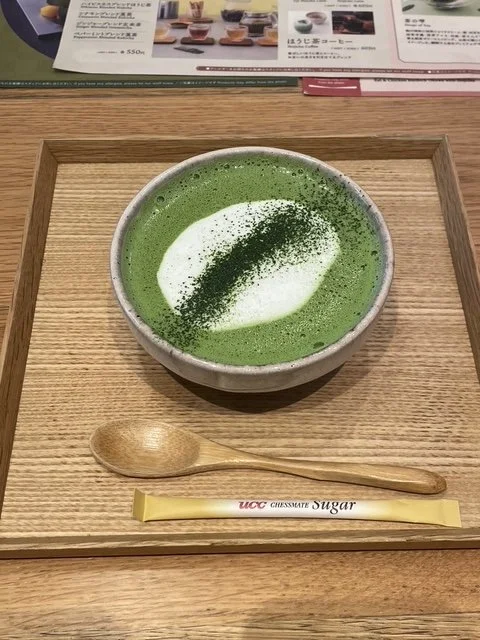
In Shinjuku, I had matcha at THE MATCHA TOKYO NEWOMAN. It’s a chain, so there are locations throughout Tokyo. It was the only matcha place close to me that opened early at 8am.
I ordered a matcha tasting, matcha latte, and a delicious matcha cake at ATELIER MATCHA in Ginza. I definitely recommend stopping here for a treat!
Kyoto:
Ippodo Teahouse is overpriced in my opinion. They won’t let you taste. You have to order a full cup of matcha in their cafe, but it’s the same cost as a tin of matcha. The staff wasn’t friendly here. Go to the FUKUJUEN shop instead. Directly above the shop is a yummy matcha cafe that I recommend. And above that, there is a fancy and expensive, but beautiful ceramic shop. Diagonally across the street from this building is a more affordable ceramic gift shop.
Also, try SEIVI Matcha cafe in Gion. I didn’t get a chance to, but it was on my list and looked really good! I also stopped by the LE LABO perfumery store. They have a pretty matcha cafe in the back that you don’t have to wait in line for. The line is mainly for people who want to shop at the perfumery store.
Shopping & Souvenirs:
Bring your passport when shopping if you plan to make tax-free purchases. Eligibility and minimum purchase requirements depend on the applicable rules and store. However, I believe Japan’s tax-free shopping system is changing in November 2026, so check the latest requirements before your trip.
Japan is a great place for vintage designer shopping. In Tokyo, I visited AMORE VINTAGE, PARADISE VINTAGE, and VINTAGE QOO in Omotesando near Harajuku. I ended up buying a birthday present for myself at Amore Vintage. I stopped by a couple vintage boutiques in Ginza as well, just to browse the selection. They had some good pieces there, but I’m not sure if there is price difference between shopping at the neighborhoods.
Japan has strict rules against counterfeit goods, but you should always inspect the condition of pre-owned designer items and review any authenticity documentation. However, keep in mind that authenticity doesn't necessarily guarantee that a bag hasn't been repaired, recolored, or otherwise altered.
Uniqlo and Onitsuka Tiger were much cheaper for me in Japan than in the USA. A $35 Uniqlo shirt would probably only cost $16 in Japan. My sneakers were $120 vs $285 with tax in the U.S.
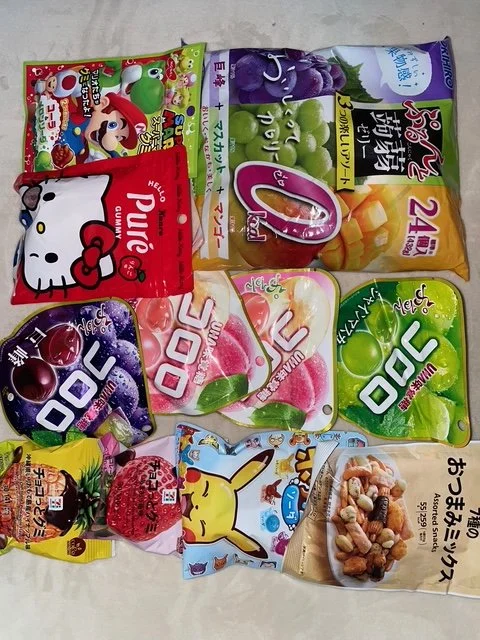
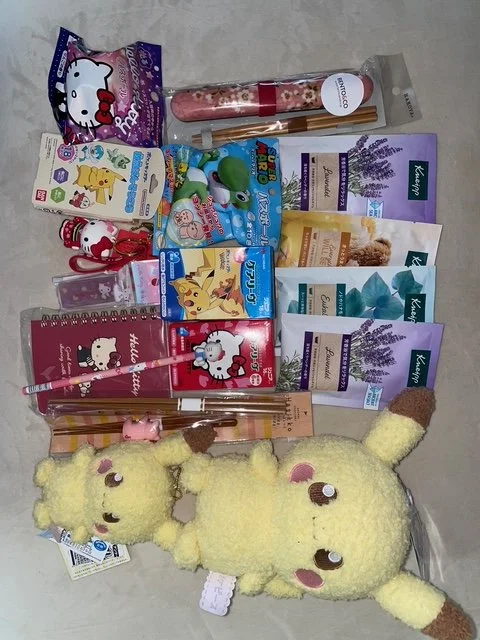
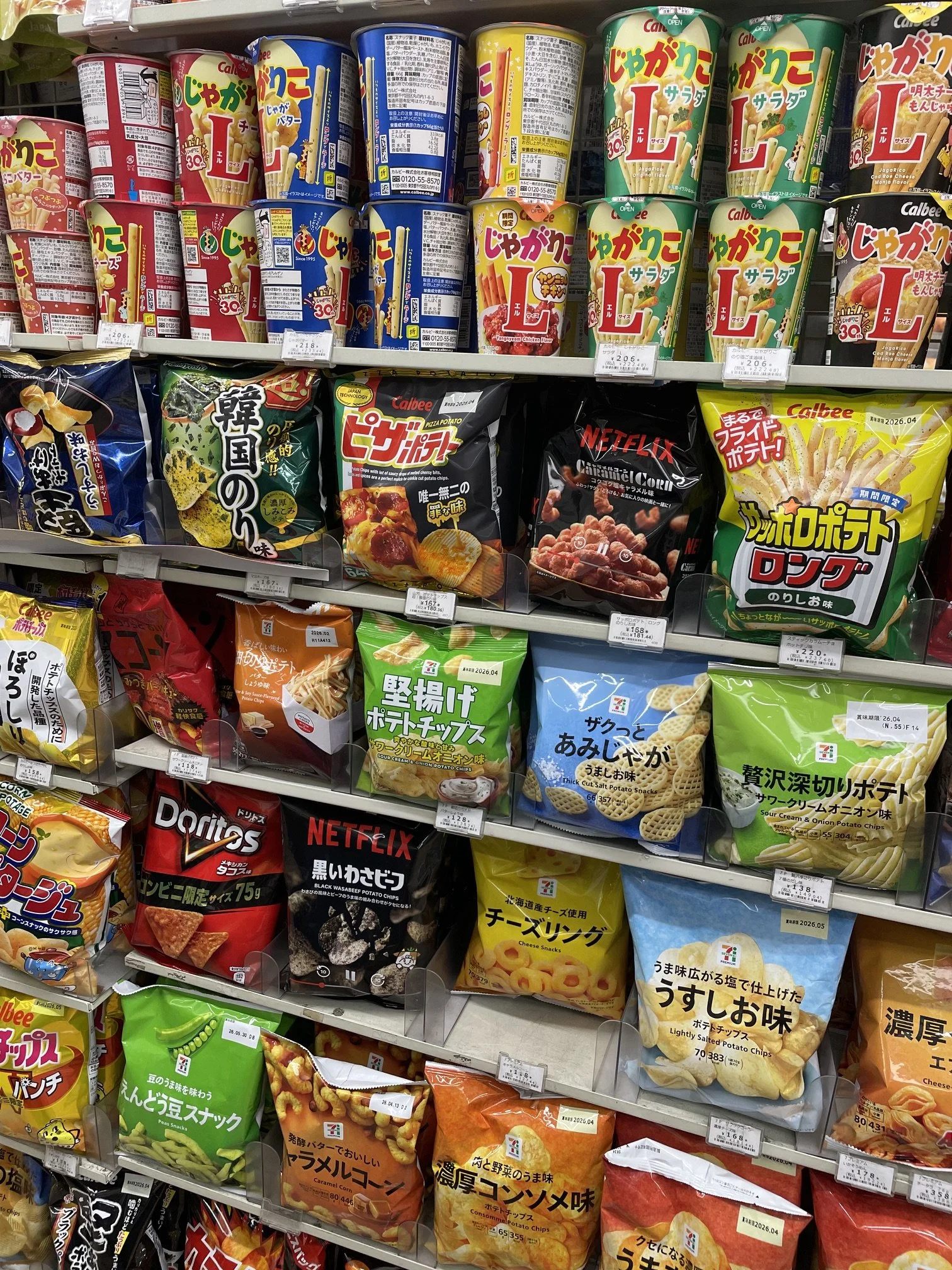
Visit pharmacies, 7-Eleven, and Loft and Hands for beauty products, gifts, candy, snacks, and little souvenirs.
For kids' gifts, I visited Kiddyland, Don Quijote, and Toy Park all in Tokyo. You can also find dedicated Harry Potter, Sanrio, and Pokémon stores.
Do not wait until the airport to shop for gifts because the lines in the gift shops are madness.
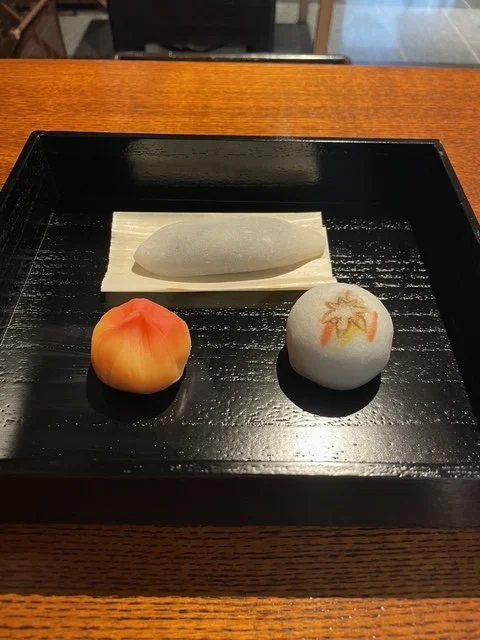
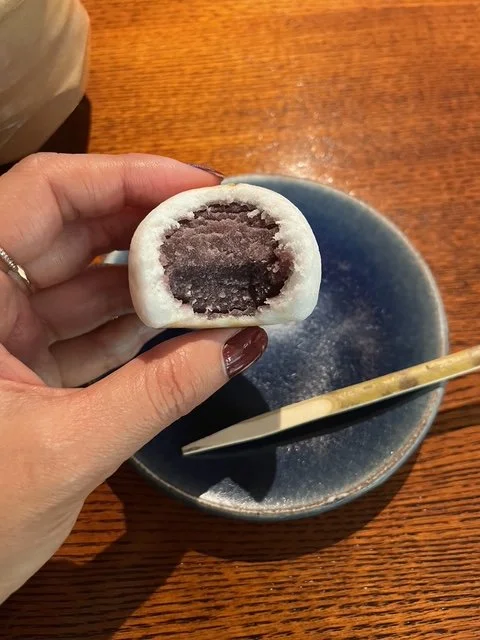
Buy fancy snacks to bring home, like cookies, biscuits, or custom Japanese sweets. I bought the most delicious matcha biscuit with white chocolate at the airport souvenir shop, as I was trying to get rid of my leftover yen. It looked something like this. I wish I got more boxes!
AMEX is widely accepted. I was surprised by this because that has not been the case when I’ve traveled to other countries.
Sights & Activities:
Tokyo:
Fourteen years ago, the famous tuna auction took place at the Tsukiji Inner Market. Back then, you were able to walk through the live auction floor at 5:30am. It was the most unique experience. The tuna fish were gigantic. They looked like whales! I had no idea tuna came in such big sizes. The men stood on small platforms yelling out a rhythmic auction chant that sounded like they were rapping because they would yell it with their whole body. Afterward, we walked nearby to line up, in the freezing cold, outside sushi bars, waiting for them to open for a sushi breakfast at 6:30am! I remember our body heat and breath fogging up the windows. I had never had sushi for breakfast before. We each got a combo set of nigiri and sashimi served with hot green tea. The meal was so fresh and simple. This has got to be one of my top 5 food experiences ever. In 2018, the tuna auction moved to TOYOSU FISH MARKET, not too far away. You can view the auction from an upper observation walkway for free. To view it from a lower observation deck, you’d have to enter the monthly lottery in advance, which only accepts 100 people per day. I highly recommend this experience, but it does require waking up super early.
Stop by the famous touristy OMOIDE YOKOCHO (MEMORY LANE ALLEY). Memory Lane is a quaint and romantic alley with lanterns, small pubs, and little izakaya restaurants.
I really enjoyed the head spa experience at THE HEAD SPA. It was such a nice treat.
Get a facial somewhere. I went to KOZY, but the experience didn’t particularly stand out to me. It was located not far from the PIZZERIA MARUMO that I mentioned above though.
I wish I had visited the TEAMLABS PLANET TOKYO museum. Next time!
Designate time to shop for gifts, souvenirs, ceramics, beauty products, vintage handbags, clothes, toys, sneakers, tea, matcha, and snacks. See above for shopping tips.
Kyoto:
Definitely visit YASAKA PAGODA, KIYOMIZU-DERA TEMPLE, and the FUSHIMI INARI GATES (the orange gates).
Additional options that I didn’t get a chance to see: KINKAKU-JI (THE GOLDEN PAVILION TEMPLE), ARASHIYAMA BAMBOO FOREST, and OTAGI NENBUTSU-JI temple, nestled in the hillside near the bamboo forest and famous for its 1,200 stone laughing Buddha disciples.
Fourteen years ago, when I visited Japan for the first time, I took a short train ride outside of Kyoto to visit a hot spring. It was the most special experience. The town was quiet and looked traditional. The venue (which I don’t even remember the name of) had an outside hot spring. You go in naked. It was February and it snowed all around us. Afterward, they served us a traditional Japanese lunch while we were still in our robes. It was a very beautiful and romantic experience. I would recommend making an appointment at a hot spring/spa outside of Kyoto if you can!
In addition to all the food stalls, NISHIKI MARKET is a fun place to visit. It has a variety of little gift shops, including places where you can personalize chopsticks.
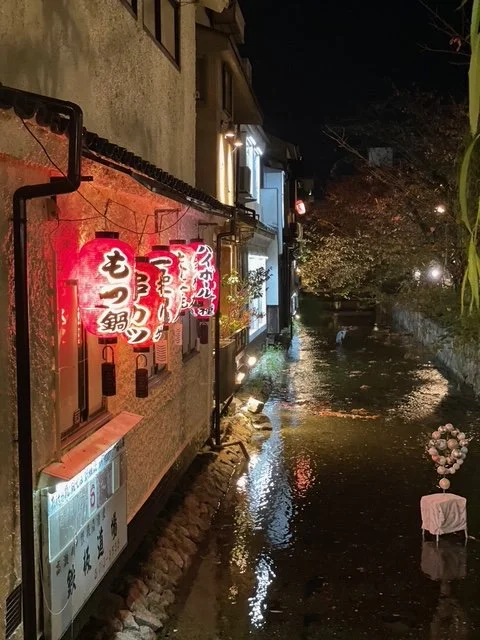
Walk through the charming PONTOCHO ALLEY. It’s lined with lanterns, little shops, and restaurants.
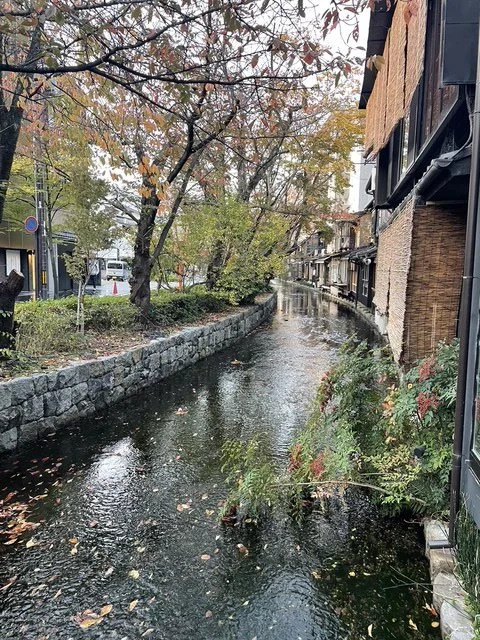
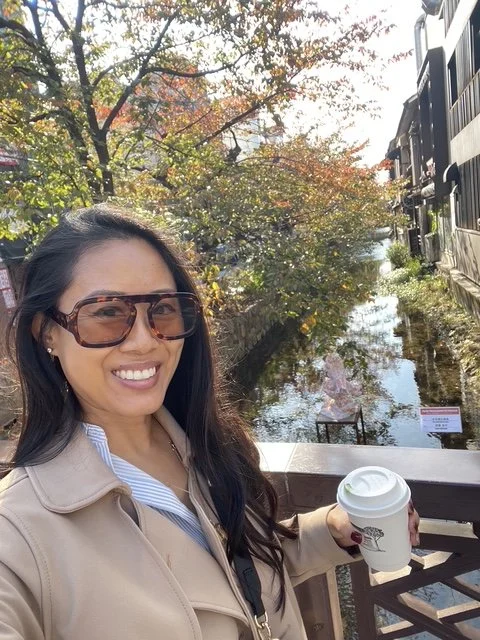
Meander along the scenic and romantic canals of Kyoto.
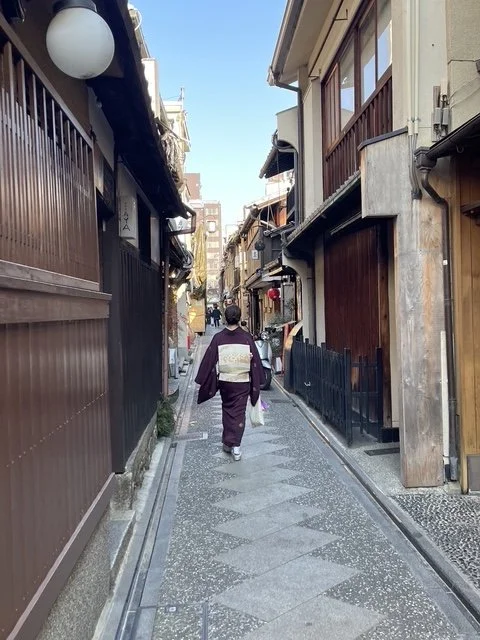
Explore the Gion district. I wish I spent more time wandering the traditional streets here instead of just rushing through to see the pagoda.
Cultural Etiquette & Everyday Life:
Don't jaywalk, even when there are no cars around. It's frowned upon, and I still felt guilty when I did it!
Do not eat or drink while walking. It’s disrespectful. They even have warning signs for this at some landmarks. If you want to snack or hydrate, stop and stand off to the side of the sidewalk or in an alley, and eat or drink then. And definitely never eat or drink on a city train! Eating on the bullet train is okay though because it’s a longer distance and you’re seated.
Do not talk loudly on the city trains. Wait in an orderly line to board.
Shinjuku train station is a maze FYI. I got lost trying to get out of the train station 😂
Japan is incredibly clean, but public trash cans can be hard to find. Carry a tote to hold your water, snacks, and any trash until you find a bin.
Take off your shoes in hotel rooms and leave them by the door, as recommended. Use the slippers provided.
When trying on clothes, some stores ask you to remove your shoes and wear a face covering to protect the garments from makeup.
Stand on the left side of escalators in many parts of Tokyo. They also drive on the left side.
Some restaurants provide baskets for you to place your purse.
As a woman, I felt very safe traveling around Japan solo. I didn’t feel like I had to worry about being pickpocketed, mugged, attacked, or catcalled. I didn’t have to worry about my clothes being perceived as too revealing or wearing nice jewelry or handbags that could be stolen. I believe the feeling of safety stems from Japan’s strict laws against crime and a culture where shame and social consequences play a significant role in discouraging bad behavior.
Anyway, WOW. I can’t believe I had so much to say about Japan! This turned into quite a list. Just writing this post makes me feel nostalgic and want to go back already! I hope you enjoyed hearing about my adventure and find my tips helpful when you visit Japan!